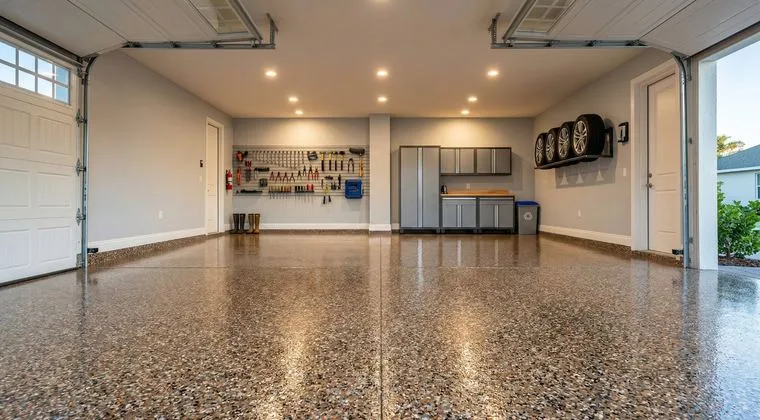
In Collier County, a professionally installed residential epoxy floor runs 10 to 20 years, a commercial floor under heavy traffic 5 to 10. A roll-on kit poured over an untested slab in a Naples garage can blister out in 1 to 3. The deciding factor is never the brand of resin — here on the coast it is whether the installer respected the water table, the salt air, and the rainy-season slab moisture before the first coat ever went down.
Naples is a hard place to make a coating last, and most homeowners do not find that out until the floor has already failed. We sit on a shallow limestone water table, a few feet of fill between your slab and standing groundwater, and we get a wall of rain from June through October. That combination puts more constant upward pressure on a garage slab in Golden Gate or Naples Park than a coating ever sees in a dry inland climate. The floors that survive it are not made from special resin — they are the ones where someone tested the slab, ground it properly, and chose a topcoat built for the sun and the salt.
So "how long will it last?" has no single answer. The same flake system can go two decades in one North Naples garage and two summers in the one next door, and the difference is entirely in the prep and the climate match. Below we put real numbers on each system, name the Naples-specific forces that shorten a floor, and walk through what actually buys you the years. For what each option costs to install here, see our Collier County cost guide.
Epoxy Floor Lifespan by System
The word "epoxy" gets stretched across products that share almost nothing in common. A $150 weekend kit and a professionally diamond-ground, polyaspartic-topped flake system are different categories of thing, separated by a decade or more of real service. Here is how the systems we install on Collier County slabs actually hold up — assuming each one is prepped and topcoated correctly for this climate, which is the only assumption that matters.
| System | Typical Lifespan | Best For |
|---|---|---|
| DIY paint / roll-on kit | 1–3 years | Almost nothing in Naples — first peels at the first rainy season |
| Solid-color professional | 10–15 years | Storage garages, utility rooms, tighter budgets |
| Flake + polyaspartic topcoat | 15–20 years | The workhorse Naples garage — handles UV and humidity, best value |
| Quartz / industrial | 15–20+ years (commercial) | Restaurant kitchens, clinics, warehouses near the port |
| Metallic with UV-stable topcoat | 10–20 years | Showrooms, waterfront-home interiors, designer entryways |
Notice that the spread is not about gloss or color — it is about the bond and the topcoat. The DIY kit lands at the bottom because it skips the grind, skips the moisture test, and finishes with a thin store-brand sealer that the first June downpour and a few weeks of closed-garage humidity will lift right off. The flake-and-polyaspartic system sits at the top because it is engineered for exactly the conditions Naples throws at it. In a drier part of the country the gap between the two would be narrower; on the Southwest Florida coast it is enormous, and that is the whole reason this guide is worth reading before you buy.
What Shortens an Epoxy Floor's Life in Collier County
Early failures are rarely bad luck. They come from a short list of forces, and Naples stacks more of them on a single slab than almost any market in the country — groundwater from below, salt off the ocean, sun from a near-vertical angle, and heat that never really lets up. Knowing each one is how you spot the difference between a floor built to outlast your car and one quietly set up to peel before the warranty period is out.
The High Water Table and Rainy-Season Moisture
Start here, because this is what fails the most Naples floors. Much of the county was built on drained wetland, and the limestone water table sits only a few feet under the slab — closer still in canal-front and waterfront neighborhoods. From June through October the daily storms saturate that ground, and the moisture has nowhere to go but up, as vapor pushing through the concrete and into the underside of any coating sitting on it. The pressure lifts the floor from beneath: bubbles, then blisters, then full delamination, and no topcoat on earth stops it from the top. This is why a floor can look perfect through its first dry season and then come apart the following summer. The only real defense is a moisture test before the job and a vapor-mitigation primer wherever the readings call for one — a step the cheap quotes skip precisely because it is the one that costs them time.
Subtropical UV Through an Open Bay Door
This far south the sun hits at a steep angle nearly year round, and it is brutal on the wrong topcoat. A standard epoxy left exposed will amber, yellow, and chalk — and in Naples the exposure is constant, because most garages here spend the afternoon with the bay door rolled up to move the heat. Add a sun-flooded waterfront living space finished in epoxy and the problem doubles. That yellowing is not just cosmetic; it is the resin breaking down and shedding its protective value. The cure is a UV-stable polyaspartic or polyurea topcoat, which is formulated to hold its color and its strength under exactly this kind of relentless light instead of going dull and blotchy after a couple of seasons.
Year-Round Heat and Hot-Tire Pickup
Naples never gets a real winter, so slab and tire temperatures stay high twelve months a year, and hot tires are harder on a garage floor than almost anyone expects. Pull a car in after a summer run down I-75 or the length of Tamiami Trail and the rubber is soft and gripping hot; on a thin or weakly bonded floor it grabs the coating and tears it loose when you back out the next morning. That is hot-tire pickup, and it is a tell-tale sign the floor was never properly ground or fully cured. A diamond-ground professional system topped with polyaspartic shrugs it off; a roll-on kit baking in a closed Naples garage usually does not last a season of it.
Weak Prep: the Acid-Wash Shortcut
Moisture is the number-one killer; weak prep is the number two, and the two almost always show up together. A correct install opens the concrete with a diamond grinder so the coating mechanically locks into the slab. The cheap shortcut is an acid wash — it etches the surface just enough to look prepped but never creates a real mechanical key. Acid-washed floors photograph beautifully on day one and start curling at the edges within months. In a climate that is already attacking the bond with vapor pressure from below and heat from above, skipping the grind in Naples is not a gamble, it is a scheduled failure, no matter what resin goes on top of it.
Salt Air on Coastal and Canal-Front Properties
Naples is a county of boaters and waterfront living — thousands of homes back directly onto a canal or sit a short hop from the beach in Naples, Marco Island, or Pelican Bay — and that lifestyle carries salt straight to the floor. Salt-laden air, plus the salt water and damp gear tracked in off the boat, works into any open bay, expansion joint, or weak seam and grinds away at a coating over time. On a sealed inland garage in Vineyards it is a minor factor; on a canal-front garage, an open-bay shop, a pool deck, or a dockside storage building it is a genuine driver of early wear. Those projects need a thicker, more chemically resistant build and a UV-stable topcoat if they are going to reach the high end of their range instead of fraying at the edges first.
Want a Floor That Survives a Naples Summer?
Tell us about your slab and where it sits — canal-front, near the beach, or inland. We moisture-test first, diamond-grind the concrete, and finish with a UV-stable topcoat built for the coast. Free estimate before anything else.
What Extends an Epoxy Floor's Life
Every force that wrecks a floor has a flip side that buys years back. Handle the Naples conditions correctly up front and a residential system rides the top of the 10-to-20-year range looking new the whole way; ignore them and you are repainting in eighteen months. Here is what actually moves the needle in this climate.
- Test the slab before you coat it. On a high-water-table lot a moisture reading and a vapor-mitigation primer are not optional extras — they are the single step that decides whether the floor survives the rainy season. Everything else is downstream of this.
- Diamond-grind, never acid-wash. A mechanically ground slab gives the coating a real bond to fight the vapor pressure and salt that are working to lift it. No grind, no longevity, full stop.
- Insist on a UV-stable polyaspartic or polyurea topcoat. This is the layer that eats the subtropical sun, the hot tires, and the salt. It is also the sacrificial layer you renew over time instead of tearing out the whole floor.
- Rinse the salt and grit off. Closer to the water this matters more: a quick rinse and dust-mop clears the salt residue and abrasive sand that otherwise sit on the surface sanding the topcoat down between deep cleans.
- Recoat on schedule, every 5 to 10 years. Refreshing the topcoat renews the wear layer and the UV protection long before the base coat is ever exposed. It is the cheapest longevity insurance you can buy in this market.
- Keep harsh chemicals off it. Skip aggressive acids, solvents, and abrasive pads; a mild cleaner protects the finish while the harsh stuff strips and dulls it years ahead of schedule.
None of this is exotic — it is simply treating the floor as a finished system that gets a little upkeep rather than a one-and-done coat of paint. Our companion guide on how to clean and maintain an epoxy floor in Collier County walks through the exact routine, including the salt-rinse step that matters most near the coast.
Residential vs. Commercial Lifespans
Why does a home floor last twice as long as a commercial one? Not quality — workload. A garage in Lely Resort sees two cars, a dropped tool now and then, and light foot traffic. A commercial floor lives a brutal day, every day, and the surface keeps the score.
Picture a distribution warehouse off I-75 or a busy restaurant kitchen on Fifth Avenue South: forklifts and pallet jacks rolling steel wheels in the same lanes, hundreds of foot-passes a shift, dropped loads, and aggressive cleaners hosed on daily — layered on top of the same coastal humidity and salt every Naples floor already fights. Each of those wears the topcoat faster than anything a home garage ever sees, which is why commercial systems are specified thicker and harder and why their recoat clock runs sooner. A quartz or industrial build carries that load best, and that is exactly why the county's kitchens, clinics, and distribution floors lean on it.
The point is not that commercial floors are inferior — it is that they live on a schedule. The operators who reach the top of the 5-to-10-year range are the ones who book the recoat into the cycle instead of waiting for the floor to fail. Match the system to the traffic, plan the maintenance around this climate, and the lifespan follows.
Signs of Wear: Recoat or Replace?
When a floor starts looking tired, the costly mistake is assuming it has to come out. Usually it just needs a new topcoat. One question decides it: is the coating still bonded to the slab? If it is firmly stuck down, you are almost certainly looking at a recoat. If it has let go of the concrete — which in Naples usually means moisture got under it — you are looking at a tear-out.
Dull, Scratched, Faded — Recoat It
A floor that is dull, lightly scuffed, scratched, or sun-faded but still locked solidly to the slab is a recoat candidate. The wear is sitting in the sacrificial topcoat, which is exactly the layer built to take it. We clean it, scuff-sand it, and lay a fresh topcoat for a fraction of replacement cost, and it comes back looking new. Catching it at this stage — before the damage reaches the base coat — is the entire reason recoating on a 5-to-10-year schedule pays for itself in this market.
Peeling or Blistering — Replace It
Peeling, blistering, bubbling, or delamination is a different diagnosis. Those mean the bond itself has failed — and in Naples the cause is almost always vapor pushing up through an untested slab, or an acid-wash prep that never created a real bond to begin with. You cannot recoat over a floor that is lifting; a fresh topcoat on a dead bond fails right along with it. That floor has to be ground off and reinstalled correctly, with a moisture test and a proper grind this time. If yours is showing these signs, our guide on why epoxy floors fail in Collier County and the moisture test that prevents it breaks down what went wrong and how to keep it from happening twice.
Frequently Asked Questions
How long does an epoxy garage floor last in Naples?
A professionally installed garage floor here runs 10 to 20 years. A solid-color system lands around 10 to 15, and a flake floor finished with a UV-stable polyaspartic topcoat reaches 15 to 20. A roll-on DIY kit usually fails inside 1 to 3 years — faster on the coast, where the first rainy season tends to lift it. What decides the number is the prep against our water table and salt air, not the brand of resin in the bucket.
How often should a Naples epoxy floor be recoated?
Plan on a fresh topcoat every 5 to 10 years — sooner on a high-traffic commercial floor or one near the water taking salt exposure, later on a lightly used inland garage. The recoat renews the sacrificial wear layer and the UV protection before the base coat is ever at risk. Catching it at the dull-and-scratched stage costs a fraction of waiting until the floor delaminates and needs a full tear-out.
Does Southwest Florida humidity shorten epoxy floor life?
Only when the prep is skipped. Naples's shallow water table pushes moisture vapor up through the slab year round, and it spikes during the June-to-October rainy season; without a moisture test and a vapor-mitigation primer, that vapor lifts the coating from beneath. A floor that was properly tested and primed handles the humidity for its full expected life. The climate does not shorten a correctly built floor — skipped moisture mitigation does.
Can you recoat an epoxy floor instead of replacing it?
Yes, as long as the bond to the slab is still sound. A floor that is dull, scratched, or sun-faded but firmly stuck down can be cleaned, scuff-sanded, and given a fresh topcoat for a fraction of replacement cost. Replacement is only forced when the coating is peeling, blistering, or delaminating — signs the bond has failed, which in Naples almost always traces to moisture under an untested slab and is something a recoat cannot fix.
How long does commercial epoxy last in Naples?
Commercial floors here generally run 5 to 10 years between recoats, because they take far more punishment than a home garage. Forklifts and pallet jacks near the port, restaurant-kitchen traffic, dropped loads, and daily harsh cleaners all wear the surface faster — on top of the same coastal humidity and salt every floor in the county fights. Heavy-duty quartz and industrial systems sit at the top of that range, and a scheduled recoat pushes them well past it.
What makes an epoxy floor fail early in Naples?
Nearly every early failure comes from prep, not resin. The usual culprits are an acid wash instead of a diamond grind, a skipped moisture test on a high-water-table slab, and a non-UV-stable topcoat that ambers in the subtropical sun. Salt air at the seams, hot-tire pickup in a closed summer garage, and harsh cleaners then finish off a floor that was poorly bonded from day one. Tested, ground, and topcoated for the coast, the same floor lasts decades.
Get Your Free Collier County Epoxy Quote
So the honest answer to "how long does it last?" is that it depends almost entirely on the install. A tested slab, a real diamond grind, a UV-stable topcoat chosen for the coast, and a little routine care add up to a floor that serves a Naples home for 10 to 20 years. Skip those steps and you have bought a floor with an expiration date measured in months — one that the next rainy season writes for you. The whole difference is in your control, and it starts with hiring an installer who treats the prep as the job, not the part to rush through.
Ready to start? Call us at (239) 323-9216 or request a free quote online. We serve Naples, Marco Island, Pelican Bay, Golden Gate, North Naples, Naples Park, Lely Resort, Vineyards, East Naples, Ave Maria, and the surrounding communities across Collier County.
Related Articles
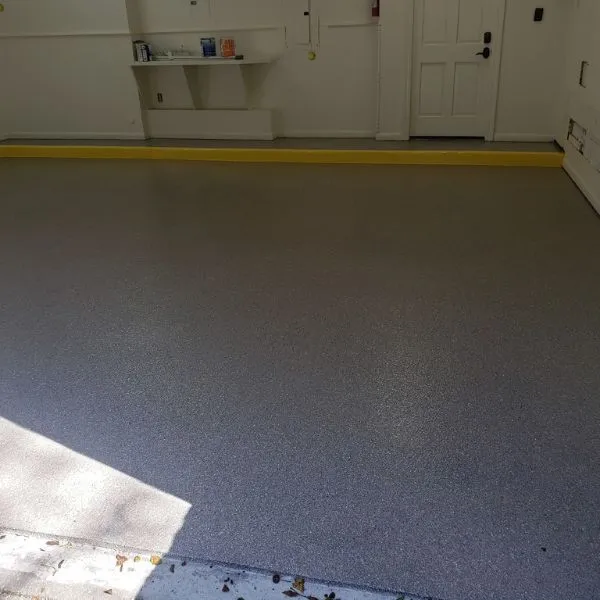
How to Clean and Maintain an Epoxy Floor in Collier County
The simple routine that keeps a floor looking new in Southwest Florida.
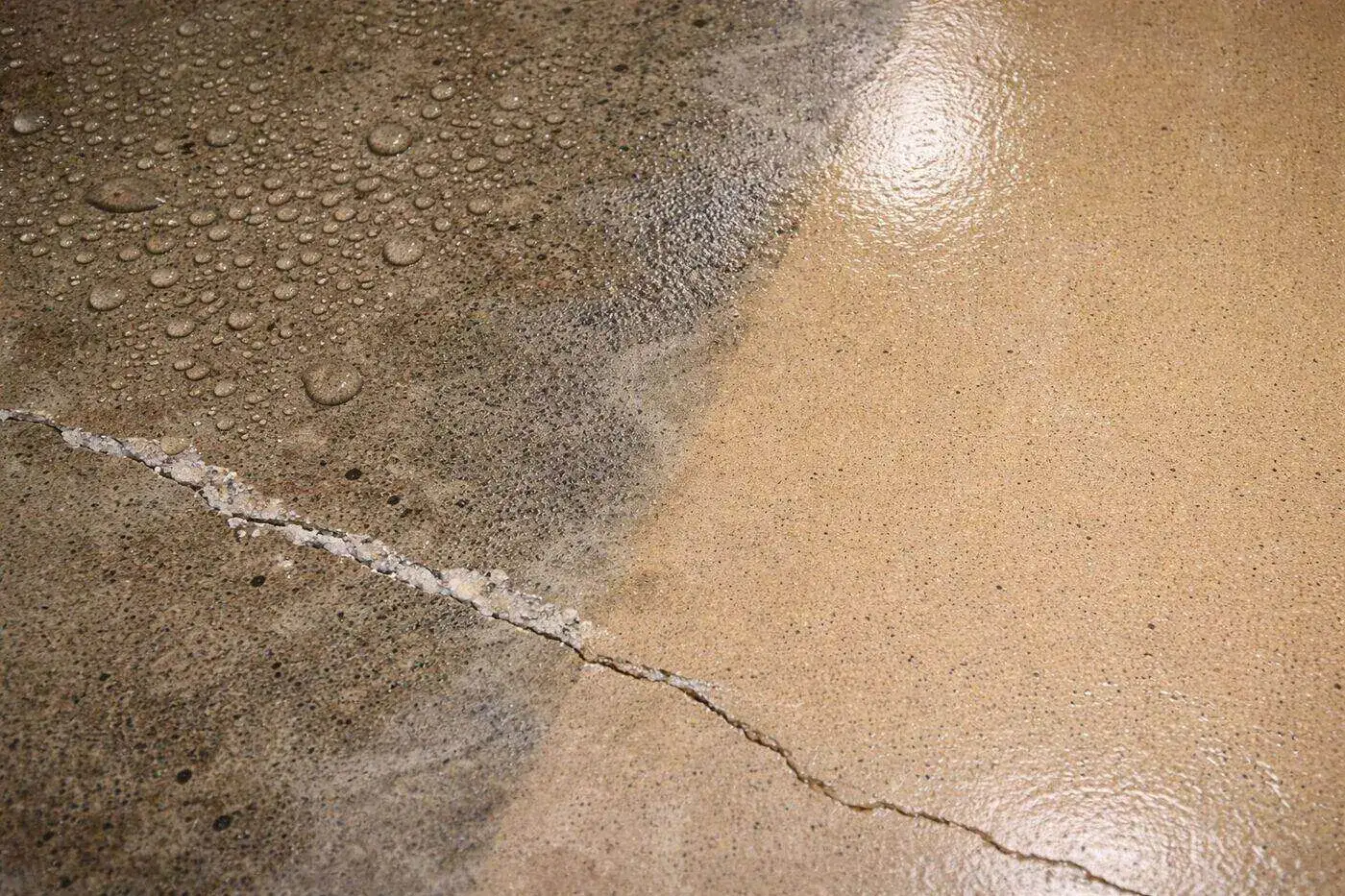
Why Epoxy Floors Fail in Collier County — and the Moisture Test That Prevents It
The high water table, MVT testing, and what to ask before you sign.
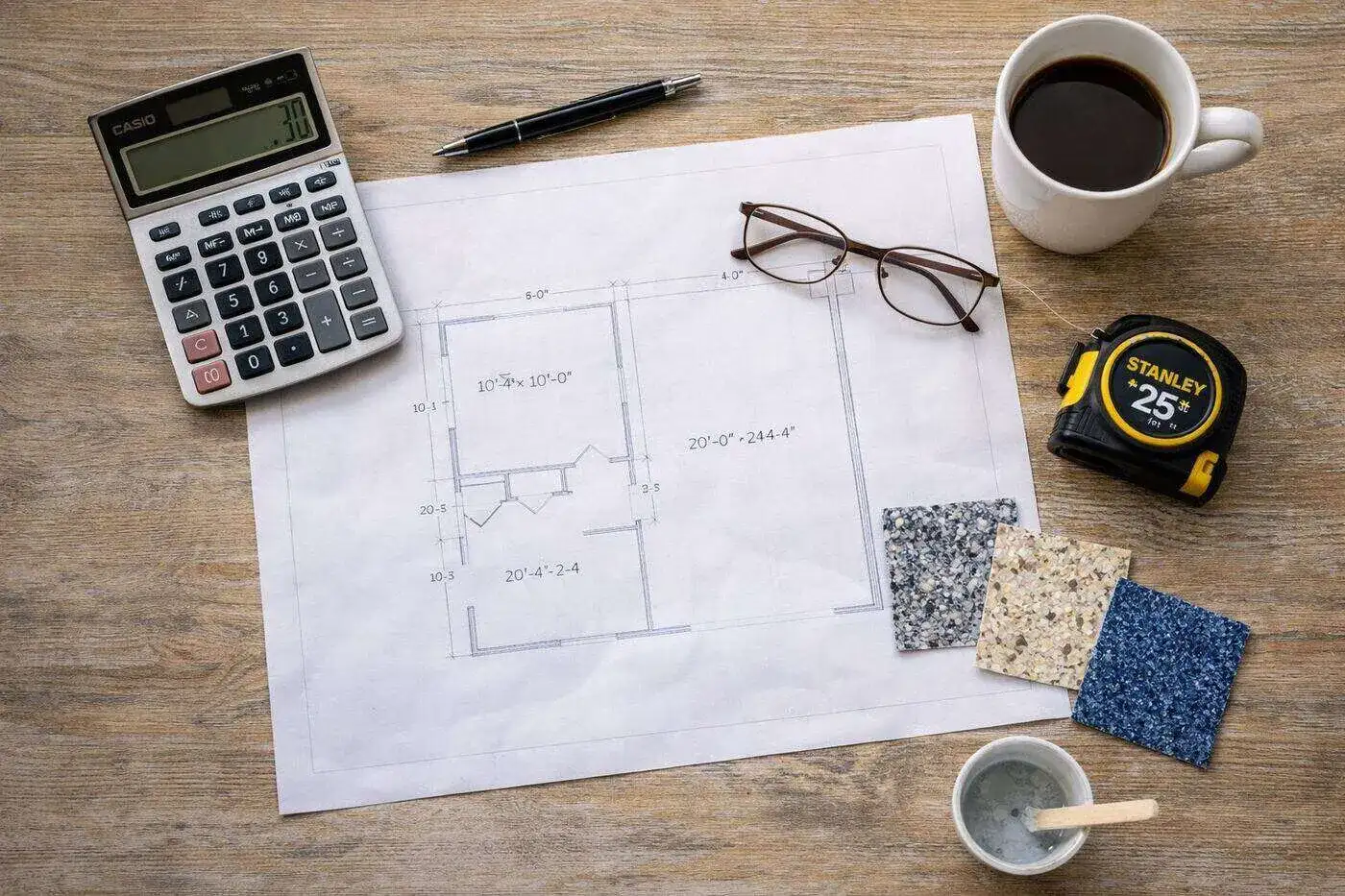
How Much Does Epoxy Flooring Cost in Collier County? (2026 Guide)
Real prices by finish and a typical 2-car garage total.