Epoxy Floor Repair in Naples — Coastal Floors, Restored to Last
Lifting edges, a chalky white bloom, hot-tire pull, or a topcoat that's gone soft underfoot? Most of these floors weren't done wrong by accident — they were done cheap: no slab-moisture test, a discount coating, and prep rushed under a Gulf-coast summer. Between salt air off the Gulf, canal-front water tables from Port Royal to the Estates, and a hard afternoon storm most days, Naples slabs punish a floor that was never engineered for them. We diagnose the true cause — amine blush, delamination, vapor-drive, or hot-tire lift — correct the slab, and re-coat to an estate standard that holds. Free, unhurried assessments from Pelican Bay to the edge of the Everglades.
Why Cheap Installers Fail on Naples Slabs
A coating doesn't peel because epoxy is fragile. It peels because something underneath it was never addressed — and along the Paradise Coast, that "something" is almost always water. Sitting only a few feet above the Gulf, much of Collier County is built on slabs poured over a shallow water table, with the finger canals of Marco Island and Aqualane Shores, the lakefront lots of Grey Oaks and Mediterra, and the older acreage slabs of Golden Gate Estates all feeding moisture up through the concrete every single day. That vapor has to go somewhere. When a sealed floor is in its way, the pressure drives the coating off the slab from below — the bubbling, hollow spots, and lifting edges homeowners notice months after a bargain crew has cashed the check.
Then there is the chalky white bloom so many Naples floors develop within a season. That is amine blush — when a discount installer applies epoxy into roughly year-round Gulf humidity, the curing agent reacts with moisture and carbon dioxide in the air and leaves a waxy, hazy film that the topcoat can never truly bond to. Add salt-laden air off the Gulf working into garages and lanais left open to the breeze, a hard afternoon storm rolling in off the Everglades most days from June through September so slabs rarely dry out, and hot-tire lift — where the low-profile tires on a warm luxury or exotic car soften a thin coating and peel it up on the way in — and you have the exact recipe a price-shopped floor was never built to survive.
Nearly every failed floor we are called to restore in Naples has one thing in common: the original installer skipped the moisture test and coated a slab that was never ready. Re-coating over that only resets the clock until it fails again. We don't do that. We find out why the floor let go — trapped slab moisture, amine blush, salt and contamination in the surface, thin or skipped prep, or an incompatible product — and we correct it before a drop of new coating goes down. Every restoration is finished to an estate standard and carried by our written 25-year warranty on materials and workmanship. The result holds up to Naples, not just to a photo on day one.
Read why coastal humidity wrecks bargain epoxy floors in Naples →
What a Naples Restoration Looks Like Done Right
No painting over the problem. Our Coastal Moisture Defense process tests the slab, names the real cause, and rebuilds the floor to live with Gulf salt air, canal-side vapor-drive, and a storm rolling through every afternoon — then backs it with a written 25-year warranty.
Find it first
Pinpoint the Real Cause
Lifting edges on a Marco Island canal-front garage and amine-blush haze on a Pelican Bay lanai are different problems with different fixes. We diagnose exactly which one you have — trapped slab moisture, salt and contamination, blush, or thin prep — before we touch a coating.
How coastal humidity affects durability →Vapor barrier
Moisture Mitigation for Wet Naples Slabs
Finger-canal lots off Naples Bay, lakefront homes in Grey Oaks and Mediterra, and slabs that took on water in a storm read high for vapor almost every time. When they do, we lay a moisture-mitigation vapor primer — the core of our Coastal Moisture Defense system — so the next coating bonds and stays put instead of lifting again.
Down to bare
Full Strip & Resurface
When a coating is too far gone — delaminated, salt-contaminated, or layered over a slab a bargain crew never prepped — we diamond-grind it back to clean concrete and rebuild with a polyaspartic system chosen for Southwest Florida's wet, salty Gulf conditions.
Targeted
Spot Repairs & Re-Topcoat
Plenty of Naples floors don't need a teardown — just hot-tire lift from a low-profile exotic corrected, a chipped garage edge rebuilt, or a UV-ambered topcoat refreshed. We handle the localized work and re-topcoat for a fraction of a full replacement, finished to show-garage standard.
Stay ahead
Coastal Maintenance Plans
Salt residue and storm-season moisture work on a floor year-round. A simple plan — periodic checks, the right rinse routine for beach and boat grit, and timely re-topcoats — catches small problems before the next hurricane season turns them into a strip-and-redo.
Honest call
Repair Before Replace
Restoring a sound slab almost always beats tearing it out and pouring again. If a spot repair or re-topcoat will get you years more, that's what we'll tell you — and only recommend a full rebuild when the slab genuinely needs one.
See our Naples pricing guide →Our Naples Repair Process
Five steps that deal with why a coastal floor failed — not just how it looks — so the fix survives the next rainy season.
Free Assessment
~45 minWe come to your home or shop anywhere in Naples, walk the floor with you, and document exactly how it's failing — lifting edges, hollow spots, hot-tire marks, salt-dulled finish. No cost, no obligation. Schedule yours free.
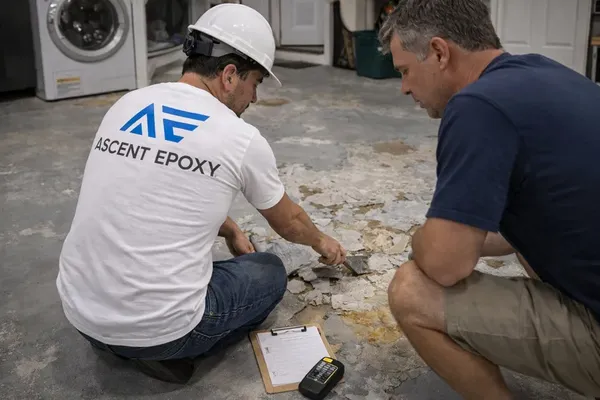
Diagnosis & Testing
1–2 hrsWe run a free ASTM slab-moisture and adhesion test — critical near the Naples Bay canals, Marco's finger canals, and any home that took on water — plus a look at the existing material, so we know whether it's vapor-drive, salt contamination, amine blush, weak prep, or a mix.
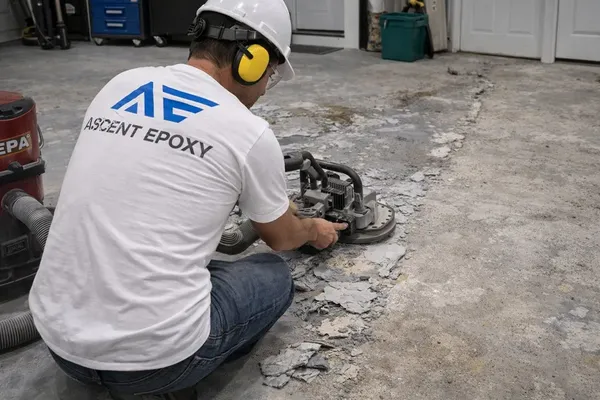
Surface Preparation
2–4 hrsBased on what we found, we either scarify the existing surface or diamond-grind the old coating back to bare concrete. On wet Naples slabs — canal lots, Golden Gate Estates acreage, flood-exposed concrete — the moisture-mitigation vapor primer goes down at this stage so vapor can't lift the next coat.
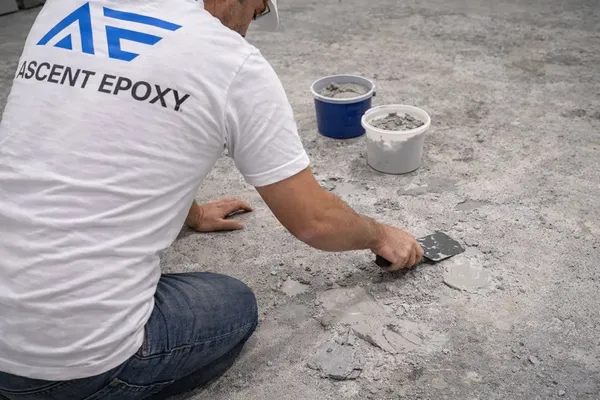
Repair & Re-Coat
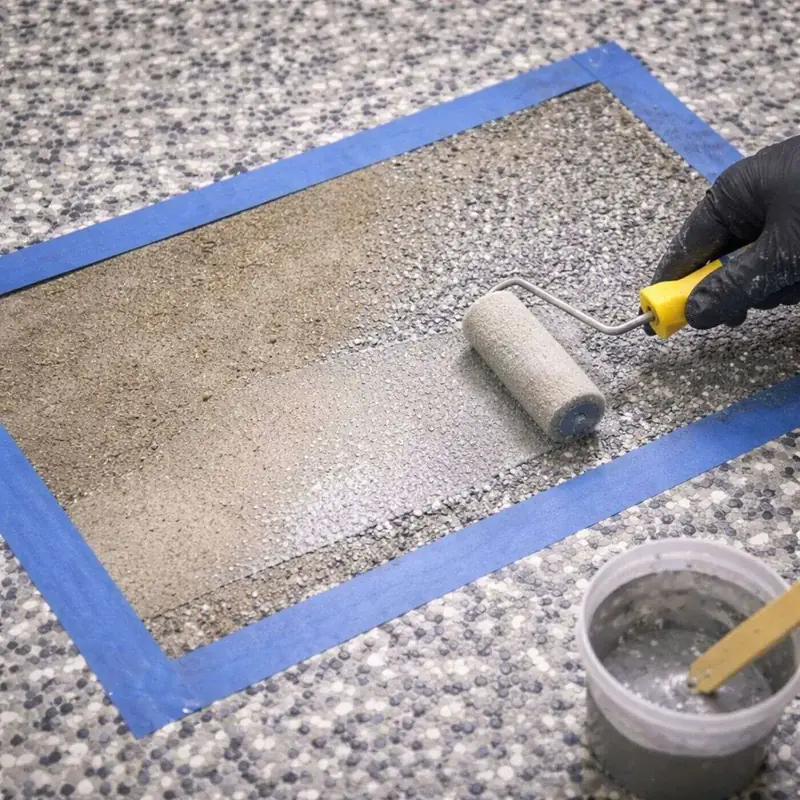
3–5 hrsWe fill cracks, rebuild chipped edges, patch the worn spots, and lay down the polyaspartic coating system matched to your slab — chosen to stand up to Naples's Gulf salt air, high moisture, and year-round UV rather than the generic off-the-shelf kit the first crew rolled on.
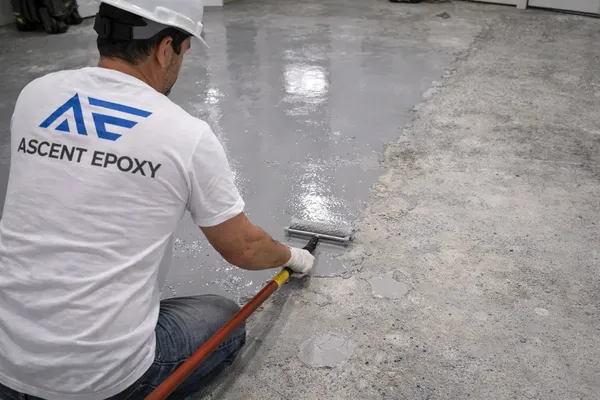
Cure & Warranty
24–72 hrsWe schedule the work and time the cure around the afternoon storm pattern and the day's humidity — a coating rushed during a downpour is half the reason floors fail down here. Then you get a written warranty in plain terms, no fine-print disappearing act.
Ready to Start? Step 1 Is Free.
Book a no-obligation Naples assessment — we'll read your slab and show you finish samples right where the floor lives.
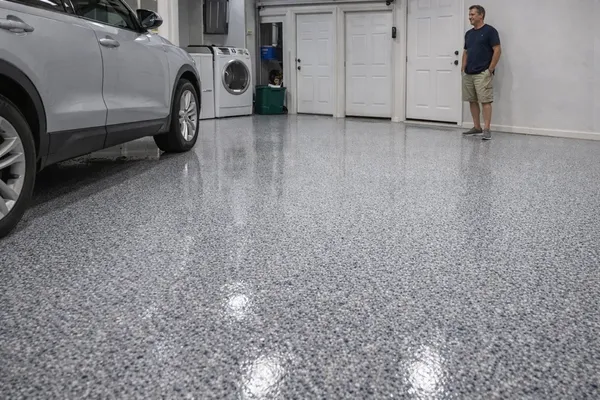
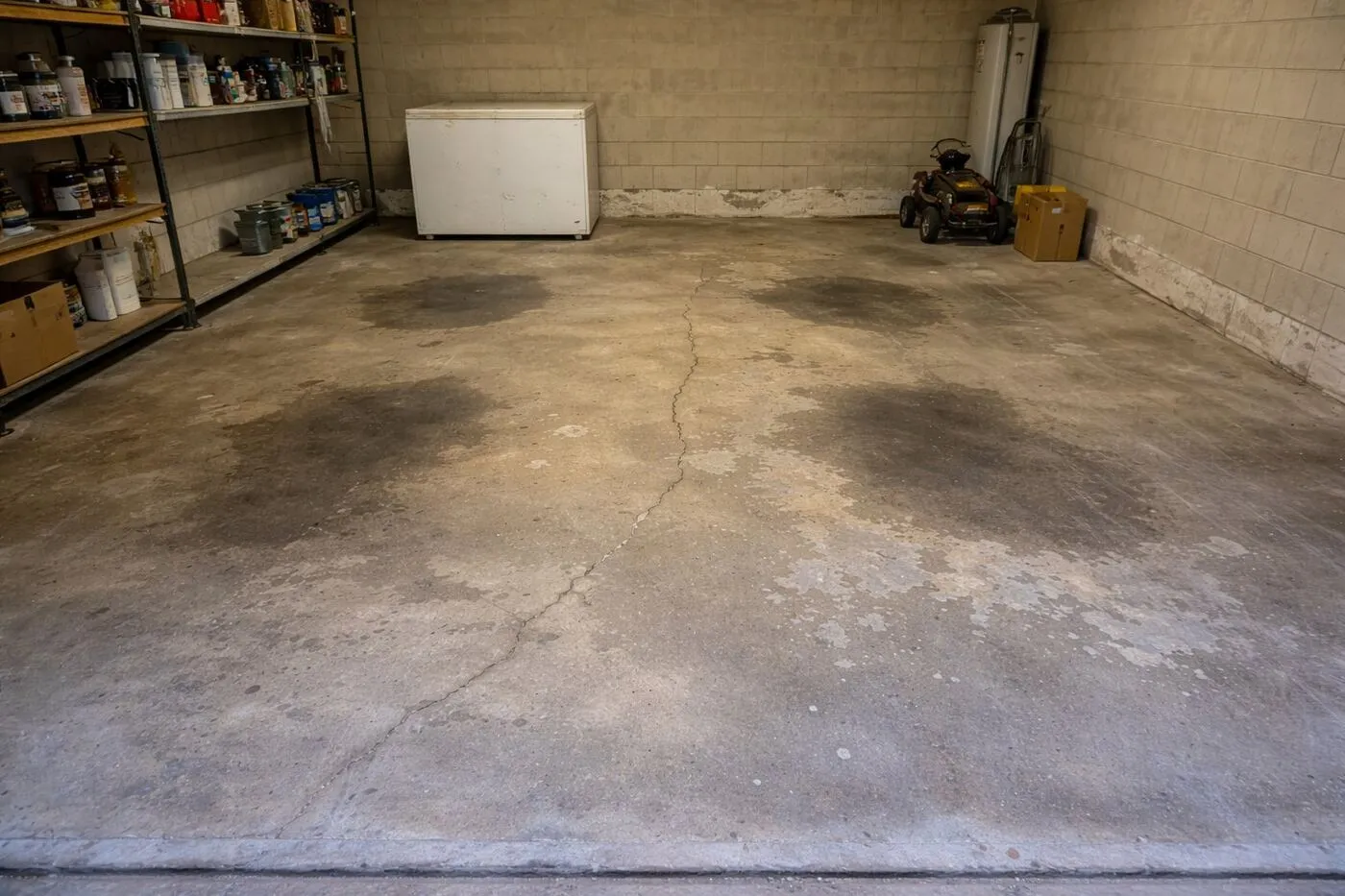
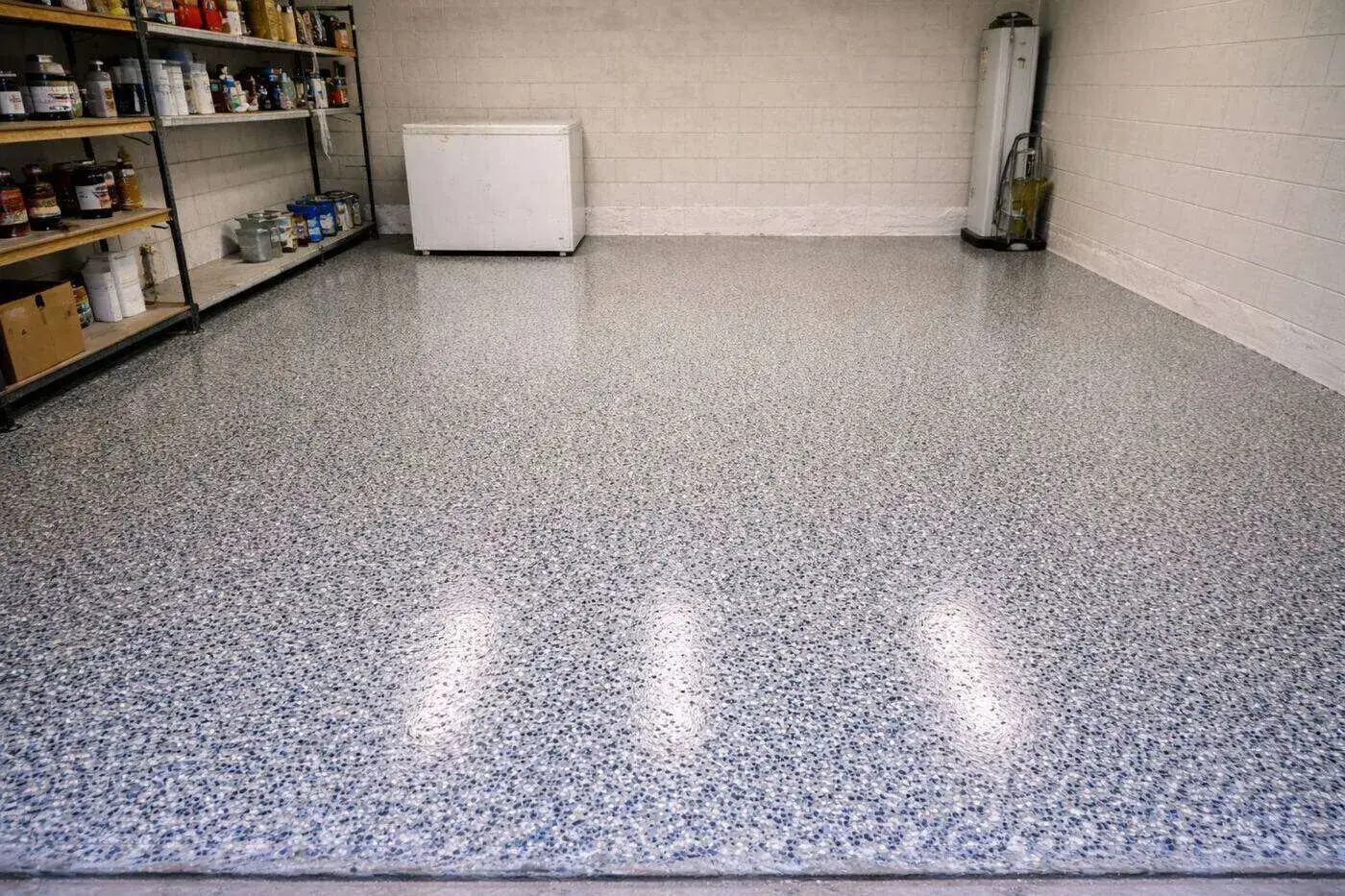
Naples Floors We Brought Back
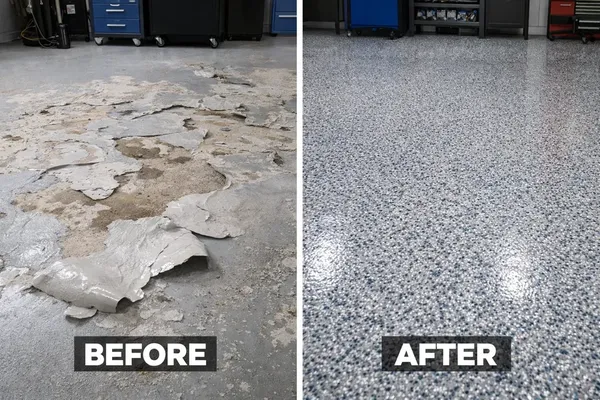
Before-and-after results from real repair and resurfacing jobs — from Naples garages to North Naples shops.
Rated 5.0★ — What Naples Neighbors Say
Real reviews from Naples homeowners and business owners — verified on Google.
"Garage floor looks brand new — no hot-tire issues."
"I've gotten so many compliments on my new epoxy floor. It's so beautiful and shiny — perfect with my interior decor."
"On time, no mess, and clear care instructions."
Epoxy Repair FAQs — Collier County
Common questions about epoxy floor repair and maintenance in Collier County.
Southwest Florida's high year-round humidity and moisture vapor transmission (MVT) through concrete slabs are the number-one cause of epoxy failure in Collier County. When a low-cost installer skips proper moisture testing or uses a coating incompatible with a high-moisture Gulf-coast slab, the bond between epoxy and concrete weakens. Moisture trapped beneath the coating creates hydrostatic pressure that drives peeling, bubbling, and delamination — and epoxy applied into humid air can develop amine blush, a chalky film the topcoat can't bond to.
Post-storm slabs, finger-canal lots, and older homes without modern vapor barriers are especially vulnerable. Ascent Epoxy Naples runs a free ASTM slab-moisture test before recommending any repair strategy.
It depends on the condition of the existing coating and the underlying concrete. In some cases, we can scarify the surface and apply a new system directly over the old one. However, if the previous coating is severely delaminated, contaminated, or applied over untreated moisture issues, a full strip-down to bare concrete is necessary for a lasting repair.
We perform on-site testing to determine the right approach for your specific floor — no guesswork.
Costs vary depending on the scope of damage, square footage, whether a full strip is needed, and if moisture mitigation is required. Spot repairs start significantly lower than full re-coats. In many cases, repair is a fraction of the cost of a complete new installation.
We provide free on-site assessments with transparent pricing so you know exactly what to expect before any work begins. See our Collier County pricing guide for general ranges.
Yes. Collier County slabs that took on water during a storm or hurricane often have chronic moisture issues that cause coatings to fail repeatedly. We specialize in post-flood slab preparation, including ASTM calcium-chloride and RH moisture testing, moisture-mitigation systems, and coatings specifically engineered for high-MVT environments.
Our process addresses the root cause so your new coating bonds permanently instead of peeling again within months.
Yes. We offer ongoing maintenance plans that include periodic inspections, cleaning guidance, minor touch-ups, and re-coating schedules tailored to your floor's traffic level and environment. Maintenance plans help extend the life of your epoxy floor by years and catch small issues before they become costly repairs.
Contact us for a customized maintenance plan for your home or business.