Industrial Epoxy Flooring in Collier County
Forklift-rated, chemical-resistant, wash-down-ready floor systems for the distribution warehouses off I-75, the cold-storage and food-processing rooms, the marine-service and fleet bays, and the packing houses that keep Collier County moving — built to hold in Gulf salt air, wet-season humidity, and a water table that sits right under the slab.
Industrial Floors Built for the Gulf Coast — Salt Air, Wet-Season Humidity, and a Slab Sitting on the Water Table
The industrial side of Collier County rarely makes the postcards, but it runs the county. Trucks pull off I-75 and Alligator Alley into the distribution rows and 3PL warehouses along Collier Boulevard (951). Freight and building-supply yards feed a construction market that never really slows. Toward Immokalee, packing houses and ag-support facilities move produce through refrigerated docks. Down at Naples Bay and along the Marco finger canals, marine-service and boatyard bays keep a Gulf-boating community on the water. Different work, one shared problem underfoot: a slab poured close to a coastal water table, breathing salt-laden humidity every day of the year, then loaded by forklifts and hosed down on every shift. Bare concrete and big-box coatings don't last long against that.
Understand why cheap floors fail here and the whole approach changes. Three forces are working on the slab at once. Salt drifting in off the Gulf of Mexico carries chloride that pits unprotected concrete and corrodes rebar from beneath. The shallow water table pushes vapor upward through the slab — the single most common reason coatings blister and let go on the Paradise Coast. And from June through October, wet-season storms keep a floor humid for weeks at a stretch, so a slab is almost never bone-dry when it's time to coat. Rather than fight all that, we design for it: a free ASTM slab-moisture test before every quote, vapor-mitigation primers where the readings call for them, and resin chemistry that bonds to a damp substrate instead of peeling off one. That's our Coastal Moisture Defense discipline, and it's backed by a written 25-year warranty against delamination and blush.
From there, the system follows the work. A refrigerated packing dock or a seafood line asks for urethane cement that shrugs off thermal shock and daily washdown. A produce cooler or meat room needs a seamless, sanitary surface that stays put through the swing from cold storage to a warm loading bay. A forklift aisle in a distribution warehouse wants a high-build, impact-rated coat with the striping baked in. A marine-service bay or fleet shop deals in fuel, oil, and solvent, so it gets chemical-resistant or novolac chemistry sealed against the salt at the same time. This is a different animal from our commercial epoxy flooring, which is engineered for retail and office traffic rather than round-the-clock industrial loads and washdowns.
One more advantage that matters on this coast: a properly sealed, moisture-tolerant industrial floor is easier to live with when the weather turns. After a storm year, Collier operators want slabs that resist water intrusion at the joints and wash down clean afterward instead of trapping moisture and mildew under a failing coating. We build with that resilience in mind — not to sell fear, but because a floor that decontaminates fast and dries out clean is simply worth more here.
Running a showroom, boutique, or hospitality space instead of a plant? Our commercial epoxy flooring service is the right fit.
What a Collier County Industrial Floor Has to Beat
Gulf humidity, salt-air corrosion, daily washdowns, cold-to-warm thermal swings, and forklift loads that never let up — here is how the right system answers each one.
100+
Chemical & Washdown Resistant
Caustic sanitizers in a seafood line, fish-oil and brine in a packing room, degreaser and diesel in a marine-service bay, battery acid in a fleet shop — a Collier facility rinses its floor with something harsh most days. We spec standard or novolac chemistry to your actual list, and to the freshwater-and-salt wash cycles that come with working this close to the Gulf.
10,000+ lbs
Forklift & Heavy Machinery Rated
Loaded racking drives tons onto tiny footplates, forklifts pivot on the same square foot all shift, and pallet jacks grind grit across the surface. Our high-build systems take that abuse without cracking or delaminating — the duty cycle the distribution and 3PL warehouses off I-75 and the Collier Boulevard (951) corridor run day and night.
OSHA
Slip-Safe in Wet Conditions
In Collier County the floor is wet more than it's dry — washdown bays, refrigerated packing rooms, dripping produce coolers, and dock aprons that track in wet-season rain. Broadcast anti-skid aggregate and high-traction topcoats hold footing through all of it, meeting OSHA slip-resistance standards so a damp slab never turns into a workers'-comp claim.
Custom
Safety Line Marking
Forklift lanes, pedestrian walkways, hazard zones, dock-edge warnings, and equipment footprints — mapped to how your building actually moves and color-coded into the floor itself, not painted on top. Applied in durable epoxy that holds under the wheel traffic and daily washdowns of a working Collier warehouse.
ESD
Anti-Static (ESD) Options
Conductive and dissipative ESD systems for the marine-electronics benches, EV and fleet charging bays, and lithium-battery work spreading across Collier County — anywhere a static discharge is a genuine hazard. Meets ANSI/ESD standards while still carrying this coast's constant humidity load.
10–20 yrs
Built to Last in a Coastal Climate
Industrial floors rarely fail from traffic first in Collier County — they fail from moisture and salt working the bond loose from underneath. Get the slab prep, vapor mitigation, and chemistry matched to this coast, and the system delivers many years of hard service instead of peeling in a season or two. That gap is the whole difference between one install and a resurfacing bill that comes back around every few years.
How coastal humidity affects durability →How It Works
Five steps from bare slab to a production-ready floor — built around the moisture testing that makes or breaks a coating on Collier County's coastal concrete, and phased so a warehouse, cooler, or service bay keeps running while we work.
Facility Assessment
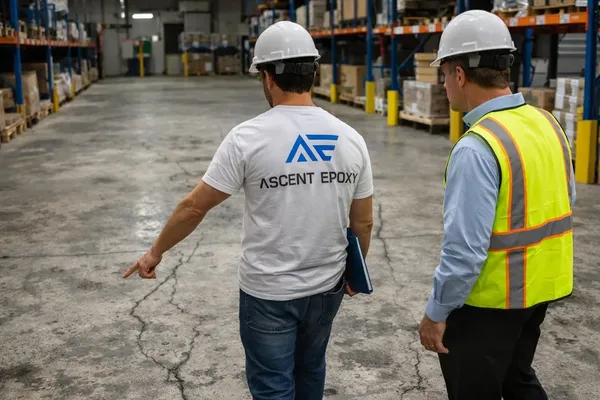
~Half dayWe walk the building end to end — tracing forklift lanes, flagging the wash-down and cold zones, and writing down every chemical that touches the floor. Then we read the slab itself: its age, its exposure, and how it sits over the water table, which is what decides how aggressive the moisture plan has to be. A 1990s East Naples slab and a green pour in a new Immokalee-corridor packing house call for very different plans. Schedule yours free.
Industrial Slab Preparation
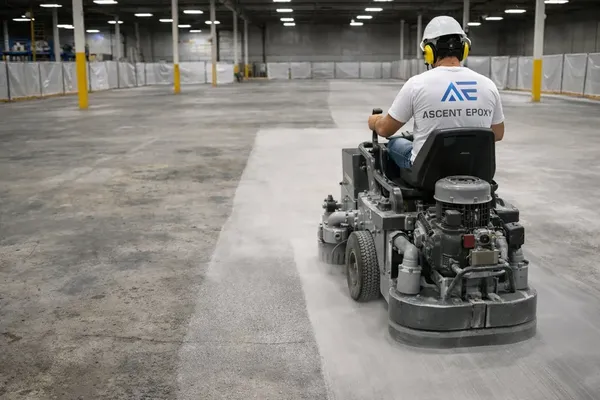
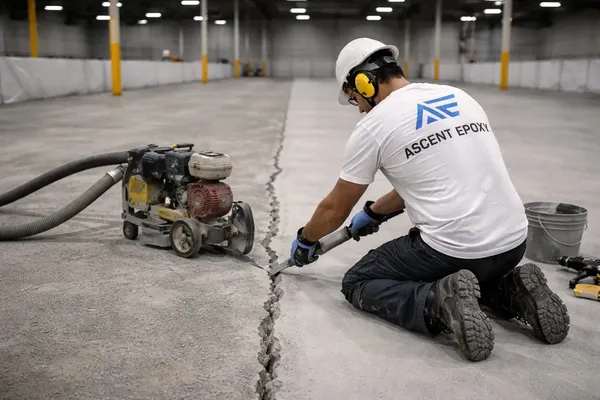
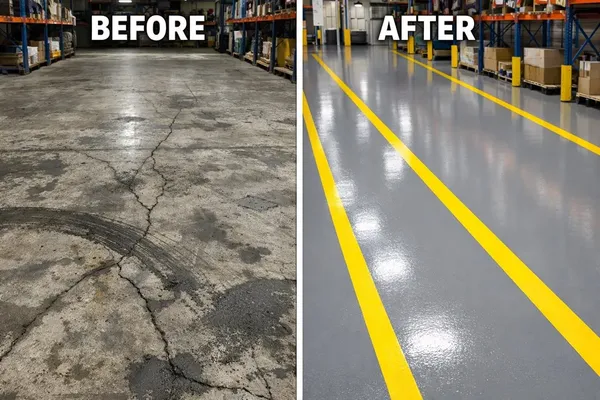
4–8 hrsDiamond grinding and shot blasting open the slab to a true bonding profile — never a wipe-and-roll. On coastal concrete that means grinding out the chloride-driven spalling and surface salt the slab has soaked up, then routing and filling every crack and control joint so nothing telegraphs up through the finished floor. Skip this and even the best resin is bonding to contaminated concrete.
Primer & Moisture Barrier
2–4 hrsThis is the step that decides whether a floor lasts in Collier County. We test slab moisture with calcium-chloride and relative-humidity probes, and on the majority of sites here — where the shallow water table drives vapor up through the concrete — we lay a moisture-mitigation barrier before the industrial primer goes down. Skip it and the coating blisters within a wet season. Do it right and the bond holds for years, which is exactly why we put it under a written 25-year warranty.
Epoxy System Application
1–3 daysBuild coats go down to the spec the assessment called for — urethane cement in packing rooms, coolers, and wash-down zones, chemical-resistant or novolac in process and marine-service areas, high-build impact-rated coatings in forklift aisles, or ESD where static is a hazard. Forklift lanes, walkways, dock warnings, and anti-skid aggregate for wet footing are worked in as we coat, not striped on as an afterthought.
Curing & Handoff
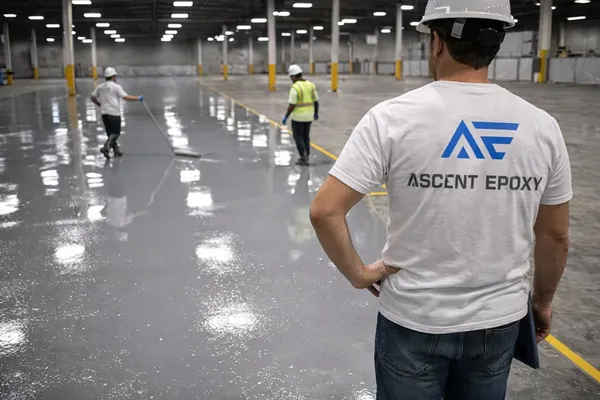
3–7 daysWe control the cure — managing temperature and the humidity Southwest Florida air pushes into an open building — then verify hardness and adhesion before we hand the floor back. Your crew leaves with maintenance guidelines written for this exact coating and facility: how to wash it down, what cleaners to keep off it, and how to protect the finish in a salt-and-washdown environment so the warranty means something.
Ready to Start? Step 1 Is Free.
Schedule your no-obligation consultation and see finish samples in your space.
Industrial Epoxy Projects
Real installations across Collier County warehouses, packing houses, and service-bay facilities.
Systems We Install for Collier County Facilities
Distribution warehouses, cold storage and packing, marine-service yards, fleet shops — each one asks for a different floor. We match the system to the work, the chemicals it sees, and the coastal slab underneath it.
Urethane Cement Flooring
Urethane cement is the toughest floor we pour, made for the rooms where ordinary epoxy quietly gives up. It grips the concrete and shrugs off thermal shock — the hot-water sanitation, the steam cleaning, the caustic washdowns, the swing from a refrigerated cooler to a warm loading bay. And it tolerates moisture in the slab better than almost anything else we install, which is the whole ballgame when the water table sits inches under the floor.
That makes it the obvious pick for Collier County's seafood and produce processors, the packing houses toward Immokalee, refrigerated coolers and meat rooms, and commercial kitchens and breweries — anywhere the floor is hosed down daily and never truly dries. It cures fast and returns to service quickly, so a working line or cold room is back in operation without a drawn-out shutdown.
Warehouse Floor Coatings
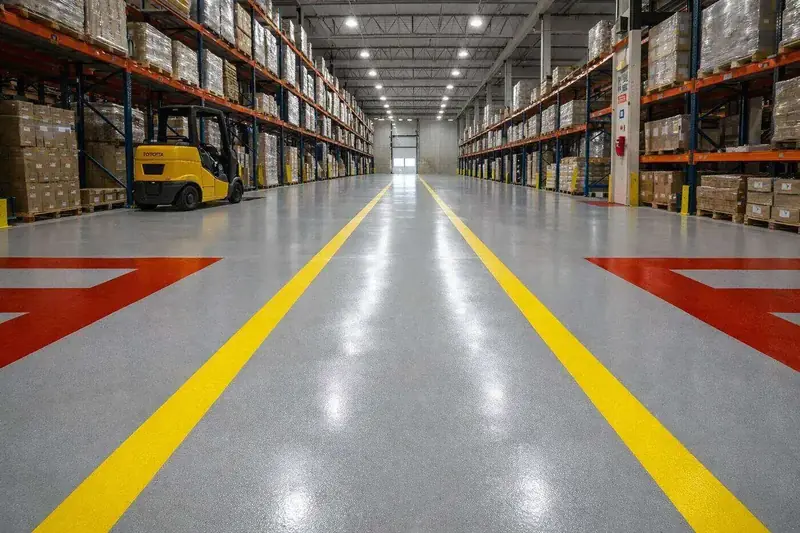
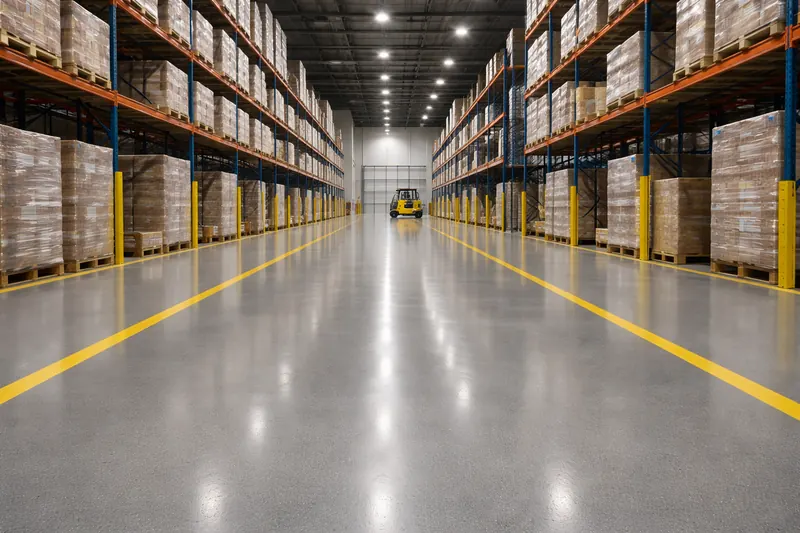
Collier County's distribution and 3PL warehouses put more daily punishment on a floor than almost any other building type — the rows off I-75, the logistics and freight yards along the Collier Boulevard (951) and Immokalee Road corridors, and the building-supply operations feeding one of Florida's fastest-growing counties. Forklifts pivot on the same square foot every shift. Pallet jacks drag grit across the surface. Racking pins tons onto footplates the size of a hand. Now add year-round Gulf humidity, and a bare slab dusts, cracks, and delaminates faster than most warehouse managers budget for.
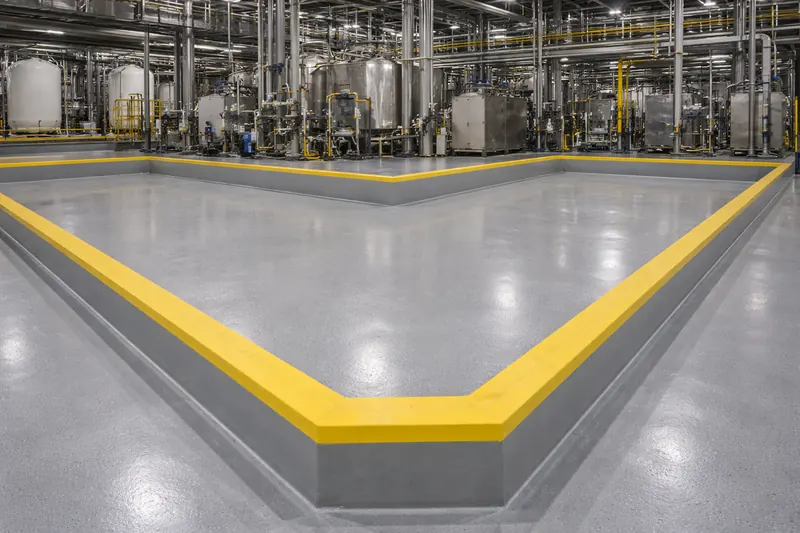
Our answer is high-build epoxy under abrasion-resistant topcoats rated for exactly that traffic, with the aisle striping, pedestrian zones, and dock-edge color coding built into the system instead of painted on after. And because a distribution building rarely gets to shut down, we phase the job zone by zone — racking stays loaded, trucks keep turning, and we coat the rest around your operation.
Secondary Containment Areas
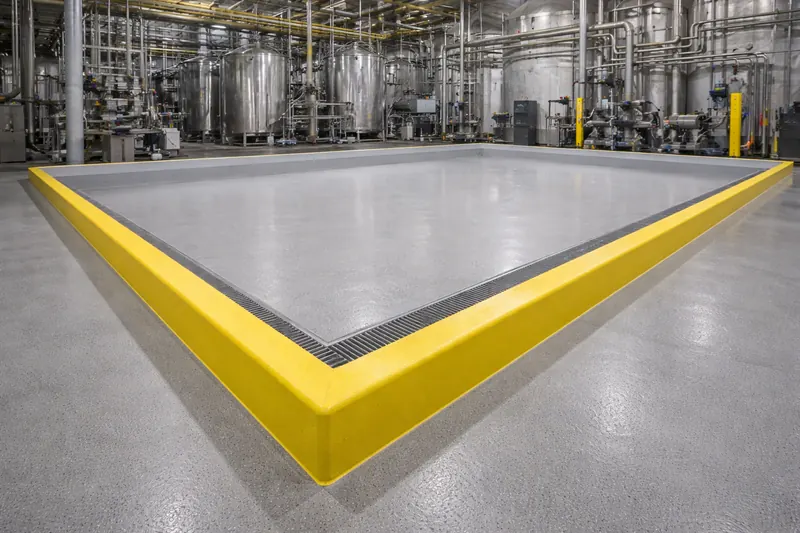
A lot of Collier facilities hold materials that legally can't be allowed to reach the ground — fuel and oil at the Naples Bay and Marco Island marinas and boatyards, diesel for standby generators and fleet fueling, agricultural chemicals near the Immokalee packing corridor, and the solvent stores behind manufacturing and service shops. Here the stakes are environmental before they're even regulatory: a spill that escapes containment can run into the county's canals, into Naples Bay and Rookery Bay, and straight down into the shallow aquifer that sits just below the surface across Southwest Florida.
We install chemical-resistant containment coatings with integrated curbing and berms that keep a leak inside the room and out of the storm drains and the Gulf watershed. Each system is sized to the volume the applicable code demands, and the coatings stand up to acids, bases, fuels, and solvents — sealed tight over a slab that, this close to the coast, is fighting vapor pressure from below at the very same time.
Rated 5.0★ — Collier County Reviews
Real reviews from real Collier County clients, verified on Google.
"Garage floor looks brand new — no hot-tire issues."
"I've gotten so many compliments on my new epoxy floor. It's so beautiful and shiny — perfect with my interior decor."
"On time, no mess, and clear care instructions."
Industrial Epoxy Flooring FAQs — Collier County
Common questions about industrial epoxy flooring for Collier County facilities.
We coat industrial floors across the full range of working facilities in Naples and Collier County, including:
- Distribution and 3PL warehouses off I-75 and Collier Boulevard (951)
- Cold storage, produce coolers, and seafood and food-processing lines
- Packing houses and ag-support facilities toward Immokalee
- Marine-service and boat-repair bays around Naples Bay and Marco Island
- Auto and fleet maintenance and service bays
- Light manufacturing and building-supply operations
Each system is matched to the demands of the facility — novolac chemical resistance for a processing or marine-service floor, urethane cement for a wash-down cooler or packing room, and impact-rated high-build for the forklift aisles in a distribution warehouse.
On a large industrial slab, Southwest Florida's year-round Gulf humidity is the deciding factor. Moisture trapped under the coating drives the delamination and peeling that ends most cheap installs here — and across a warehouse floor, a moisture reading that varies from one bay to the next can compromise thousands of square feet at a time.
So we test the whole slab, not a corner of it, using calcium-chloride and relative-humidity probe methods. Where the readings run high — which is most sites this close to the coast — we lay moisture-mitigating primers and vapor-barrier coatings before the epoxy goes down, and we time the install around favorable conditions to protect the bond. That's our Coastal Moisture Defense process, and it stands behind a written 25-year warranty.
Yes. Our industrial epoxy systems use chemical-resistant resins that stand up to acids, alkalis, solvents, petroleum products, oils, and fuels — the substances a Collier facility actually handles day to day.
We spec the resistance rating to your real chemical list. Standard epoxy handles oil, grease, and mild sanitation. For seafood and produce processors, marine-service yards, and fleet shops dealing with concentrated acids, brine, and harsh solvents, we step up to novolac epoxy systems with the highest chemical resistance available.
Yes. We install OSHA-compliant safety line marking as part of our industrial epoxy flooring systems. This includes:
- Pedestrian walkways
- Forklift traffic lanes
- Hazard zones and restricted areas
- Equipment placement boundaries
- Emergency exit paths
- Color-coded area designations
All markings are applied with durable epoxy paint that bonds directly to the floor system and withstands heavy daily traffic without fading or peeling.
Most industrial installs run 3 to 7 days, depending on the facility size, the condition of the existing slab, and how complex the coating system needs to be. Coastal slabs that need moisture mitigation add cure time — a step we never rush, because it's what keeps the floor down for the life of the warranty.
For larger buildings we phase the work, keeping part of your operation running while we coat another section, so a warehouse or cold room isn't dark for a week. You get a detailed timeline at the estimate stage, and we schedule around Southwest Florida's wet-season conditions so humidity doesn't compromise the bond.