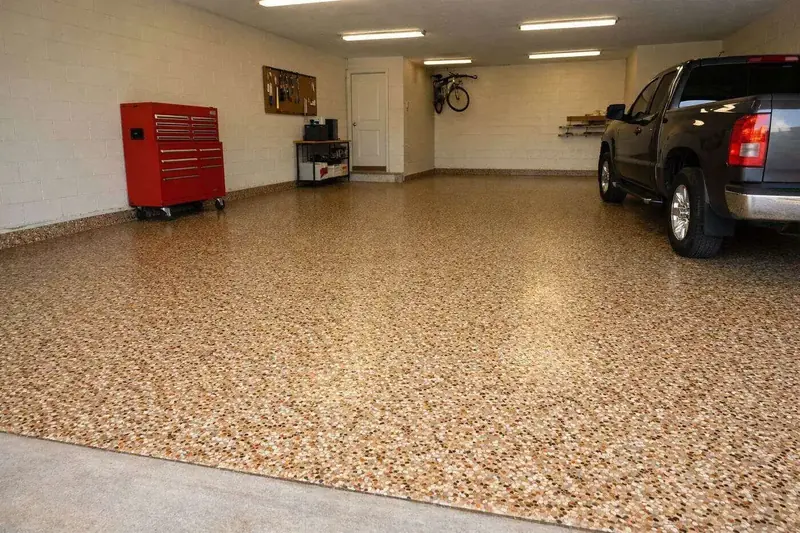
For a garage in Collier County, the coating that lasts is rarely epoxy alone or polyaspartic alone — it is the two stacked together: an epoxy base that grips the slab, sealed under a UV-stable polyaspartic topcoat that takes the salt air off the Gulf, the storm-season humidity, and the sub-tropical sun. The "epoxy or polyaspartic" argument you hear from competing quotes is a false either-or. The real question is how the two layers are combined for a waterfront, high-humidity county like this one.
If you have priced a floor anywhere from a canal home on Marco Island to a two-car garage in Golden Gate or North Naples, you have probably been pulled between two sales pitches. One crew tells you epoxy is the only serious coating. The next insists polyaspartic is the only thing that survives a Florida summer. Both are half-right, and both are quietly describing a single layer of a system that performs best when you use both layers for what each does well. Here in Naples the stakes are higher than in a dry inland market: a slab a few minutes from the Gulf in Old Naples or Pelican Bay is fighting salt-laden air, afternoon downpours from June through October, and a water table that sits close to the surface.
Below, Blake walks through what epoxy and polyaspartic each actually are, where each genuinely earns its keep, how they line up head to head, and why this coastal climate tilts the recommendation toward a combined floor. Want a real number for your exact slab in Naples Park, Vineyards, Lely Resort, or anywhere across the county? Call (239) 323-9216 for a free estimate. If you would rather understand the trade-offs first, keep reading.
What Epoxy Actually Is
Strip away the marketing and epoxy is a two-part thermoset: a resin and a hardener that you combine on site, where they react and harden into a rigid, plastic-like film locked onto the concrete. Its value lives in two things, adhesion and body. When the crew diamond-grinds a Naples slab open and rolls epoxy over it, the resin wicks down into the freshly exposed pores and anchors itself, then builds upward into a thick, seamless coat that bridges hairline cracks and small pits and leaves a hard, continuous surface where there used to be bare concrete.
That is why, in any properly specified floor, epoxy lives on the bottom. It is the structural layer — the part that does the gripping, that lays down most of the measurable thickness, and that holds the decorative flake. On a flake or chip floor, those vinyl chips are broadcast straight into the wet epoxy while it is still tacky, and they set permanently as it cures. Take the epoxy away and you have removed the floor's foundation; nothing above it has the same bite into the slab.
Where epoxy falls short is as the layer you actually walk on and park on in a county like Naples. Left exposed, a standard epoxy surface cures slowly, sulks in high humidity while it is curing, and ambers and chalks once Florida sun gets at it. That is not a knock on the material — it is simply the wrong job for it. Epoxy is built to be the base, not the finish, and asking it to also be the weatherproof top layer is where bare-epoxy floors go wrong here.
What Polyaspartic Actually Is
Polyaspartic sits in the polyurea family — an aliphatic coating engineered from the start to be a finish coat, not a base. Everything epoxy is slow and fussy about, polyaspartic is fast and tolerant of. It kicks off and sets in roughly one to two hours, which means a garage in East Naples or Ave Maria can be walked on the same afternoon the crew rolls it and driven on the next day. Just as important for this region, it cures cleanly across a much wider band of temperature and humidity, so a muggy 85-degree morning that would cloud an epoxy topcoat is no obstacle.
For a coastal county the property that earns the upgrade is UV stability. A good polyaspartic stays clear and holds its color under direct sun instead of yellowing and going dull the way a bare epoxy surface does after a couple of seasons. Pair that with its hardness — it resists abrasion and chemicals exceptionally well — and it shrugs off the things that beat up a Naples garage floor: hot tires backing in from the heat, dropped tools, pool chemicals, and the salt residue that rides in on cars near the coast.
What you give up is thickness. Polyaspartic lays down as a thinner film than epoxy and costs more per gallon, so coating an entire floor in it alone would run the price up while sacrificing the body that epoxy supplies cheaply. That single trade-off is the whole reason polyaspartic belongs on top rather than throughout: it is a superb protective skin, but it depends on a thicker layer underneath to give the floor its substance.
Epoxy vs. Polyaspartic: Head to Head
Set the two materials next to each other on the things a Naples homeowner actually cares about and the pairing logic stops being a sales line and becomes obvious. Here is where each one lands on the factors that decide how a floor holds up by the coast.
| Factor | Epoxy | Polyaspartic |
|---|---|---|
| Cure time | Slow — roughly 12–24 hours a coat and several days to reach full hardness | Quick — sets in about 1–2 hours, foot traffic the same day |
| Sun / ambering | Yellows and chalks under Florida sun if left as the top layer | UV-stable; stays clear and color-true outdoors |
| Humid-air cure | Can blush or cloud when the air is muggy | Cures dependably across a far wider humidity range |
| Wear / abrasion | Solidly durable under everyday use | Exceptionally hard; high wear and scuff resistance |
| Cost per coat | Cheaper per gallon — an economical way to build body | Premium material; more per gallon |
| Finish | Thick glossy film that holds decorative flake | Clear, rock-hard sealing layer that keeps color true |
| Best role | The bonding, thickness-building base coat | The fast-curing, UV-proof topcoat |
Run your eye down the columns and the logic writes itself. Epoxy owns build and cost. Polyaspartic owns cure speed, sun resistance, humid-air tolerance, and surface hardness — precisely the four things that matter most a few minutes from the Gulf. Each material is strongest exactly where the other is weakest, which is why a serious Naples spec stacks one over the other rather than making you pick a winner.
Not Sure Which System Your Floor Needs?
Tell us about your slab and how you use the garage. We will spec the right system for a salt-air, high-humidity county and hand you a real Naples number, free.
Why the Topcoat Matters So Much in Collier County
In a dry, temperate climate a plain epoxy top layer might coast along for years. Naples is the opposite environment, and the topcoat is the first place that difference shows. Four conditions specific to this stretch of the Southwest Florida coast gang up on the wrong finish, and every one of them argues for polyaspartic on top.
Humidity comes first. Naples sits around 75 percent relative humidity, and the slab itself rarely cools off. Slow-cure epoxy left as the exposed surface can blush, cloud, or simply refuse to set right in that kind of soupy air, especially as a thin top layer. Polyaspartic was formulated to cure dependably in warm, wet conditions like a July morning in Pelican Bay, which is exactly why the finish coat on a properly built floor here is polyaspartic and not epoxy.
Then the sun does its work. Sub-tropical UV ambers and chalks any coating that is not rated for it, and it moves fast on a garage that floods with daylight every time the door rolls up off a driveway in Lely Resort or Vineyards. A bare epoxy top yellows and goes flat under that load. A UV-stable polyaspartic holds its clarity and color, so the floor still reads new after three or four Florida summers instead of looking sun-baked and tired.
Now stack on the two things that make Naples genuinely coastal: a high water table and salt air. The water table sits close to the surface across much of the county, pushing moisture vapor up through slabs from below — a problem solved underneath the floor with proper grinding, a moisture test, and the right primer, not by the topcoat. But the finish still has to win the battle above the slab, and that is where salt air joins in: on a Marco Island canal home or a property near Naples Bay, salt-laden breeze off the Gulf chews at weaker coatings around edges and open bay doors over time. A hard, UV-stable polyaspartic stands up to that far better than exposed epoxy ever could. Net it out and the topcoat is doing most of the work of surviving Naples — the precise job epoxy is worst at and polyaspartic was built for.
The Hybrid System (and What It Costs)
Combine all of that and you arrive at the floor most Naples garages should be getting. There is nothing exotic about it — it is just each material doing the job it is good at. The sequence on the slab runs like this: diamond-grind the concrete to an open, mechanical profile, roll on an epoxy base coat for grip and thickness, broadcast decorative flake into that wet base for color and traction, then lock the whole assembly under a clear, UV-stable polyaspartic topcoat. Epoxy bonds and builds, the flake carries the look, and the polyaspartic does the surviving.
On cost, a full flake system in Naples generally runs about $7 to $12 per square foot installed, with simpler solid-color floors landing nearer the bottom of that range and metallic finishes climbing higher, into roughly the $9 to $14 per square foot territory. Choosing the polyaspartic topcoat over a plain epoxy finish on the same flake spec adds somewhere around $1.50 to $3.00 per square foot. For a typical Naples two-car garage in the 400-to-500-square-foot range, a base flake floor usually lands between about $2,000 and $4,500 all in — that figure covers the full grind, crack repair, the epoxy base, the flake broadcast, and a clear sealing coat. Put the polyaspartic wear layer on top and the same garage lands nearer $4,000 to $5,500, because the jobs that specify it generally carry the heavier full-broadcast flake spec and the deeper prep that go with it. The topcoat upgrade is a modest slice of that total and it is the slice doing the most to keep the floor alive in salt air and sun, which is why it goes on nearly every residential job we quote here.
For the full breakdown — finish-by-finish pricing, a worked two-car garage total, and the moisture and prep factors that move a Naples quote — see the full Collier County cost guide. It lays out solid-color, flake, metallic, and quartz pricing next to the high-water-table testing this county demands.
Which Should You Choose?
For the overwhelming majority of Naples garages and residential floors, the answer is the hybrid — epoxy base, polyaspartic top. It is the only configuration that balances thickness, price, appearance, and the sun-and-salt protection a coastal county forces on you, and it is what goes on the large majority of the homes we coat from Old Naples out to Golden Gate Estates. If you take one thing from this article, take that.
There are still a few narrow cases where going pure on a single material is defensible:
- Polyaspartic on its own earns its place where turnaround beats everything else — a busy commercial bay or shop floor that cannot give up days to an epoxy cure. The same-day return to service is the payoff; the price is a thinner build and a higher material bill per square foot.
- Epoxy on its own is rarely the right finish in Naples, because a bare epoxy surface ambers and fights the humidity here. The exception is a shaded interior or utility room that never sees direct sun, on a tight budget, where UV simply is not in play.
- The hybrid is the default for everything else, which in this market means almost every floor — it puts each layer exactly where it is strongest.
The honest read is that "epoxy versus polyaspartic" is usually a manufactured choice. The decision that actually matters is how to combine the two and how thick to build the stack for your slab and how hard you use the space. That is a conversation worth having with an installer who tests your concrete and specs the floor for a salt-air, high-humidity county — not one trying to sell you a single product because it is the only one in the truck.
Frequently Asked Questions
Is polyaspartic better than epoxy?
Neither one is flatly better — they play different positions. Epoxy makes the better base because it bites into prepped concrete and builds real thickness. Polyaspartic makes the better topcoat because it cures fast, stays UV-stable, and handles humid air. On a Collier County slab the floor that wins uses both: an epoxy base under a polyaspartic topcoat, rather than betting everything on one layer.
Can you put polyaspartic over epoxy?
Yes — that is precisely how the better floors in Naples are built. The epoxy base goes down first for adhesion and body, decorative flake is broadcast into it, and a clear polyaspartic topcoat seals the whole assembly. The polyaspartic shields the epoxy from sun, abrasion, and chemicals and supplies the UV stability epoxy does not have on its own.
Does polyaspartic yellow in the sun?
A quality polyaspartic is UV-stable and resists the yellowing and ambering that plain epoxy shows in sunlight. That matters in a county that bakes in sun year-round and sits on the Gulf, where any coating that is not UV-rated fades early. Bare epoxy tops amber and chalk under that exposure, which is the main reason Naples floors are finished in polyaspartic instead.
Is polyaspartic worth the extra cost near the coast?
In Naples, usually yes. The polyaspartic topcoat adds roughly $1.50 to $3.00 per square foot over a plain epoxy finish, and in return you get UV stability, humid-air tolerance, and harder, more wear-resistant surface. Given the salt air, the sun, and humidity that hovers near 75 percent, that topcoat is what stops the floor from ambering, blushing, and wearing out before its time.
How long does a polyaspartic topcoat take to cure?
A polyaspartic topcoat usually sets in about one to two hours and takes foot traffic the same day, with vehicles often back on it the next. Epoxy is far slower — commonly 12 to 24 hours per coat and several days to fully harden. That quick turnaround is exactly why polyaspartic suits commercial bays and shop floors around Naples that cannot sit idle for days.
Which lasts longer, epoxy or polyaspartic?
It depends on conditions, but in Naples the hybrid outlasts either material used alone. A bare epoxy floor ambers and wears faster under coastal sun and humidity, while a thin standalone polyaspartic surrenders the thickness epoxy provides. An epoxy base protected by a UV-stable polyaspartic topcoat marries body and durability for the longest service life in this climate.
Get Your Personalized Collier County Epoxy Quote
This article hands you the materials and the reasoning, but the right spec for your floor still comes down to your slab, your sun exposure, and how hard you use the space. Every Ascent Epoxy Naples estimate starts with Blake or the crew putting eyes on your concrete, running a moisture test for the county's high water table, and talking straight about which system fits — nearly always a flake floor with an epoxy base and a UV-stable polyaspartic topcoat specced for salt air and sun.
Ready to move? Call (239) 323-9216 or request a free quote online. We coat floors in Naples, Marco Island, Pelican Bay, Golden Gate, North Naples, Naples Park, Lely Resort, Vineyards, East Naples, the Vanderbilt Beach and Old Naples enclaves, and communities across Collier County.
Related Articles
How Much Does Epoxy Flooring Cost in Collier County? (2026 Guide)
Real prices by finish, a typical 2-car garage total, and local cost drivers.
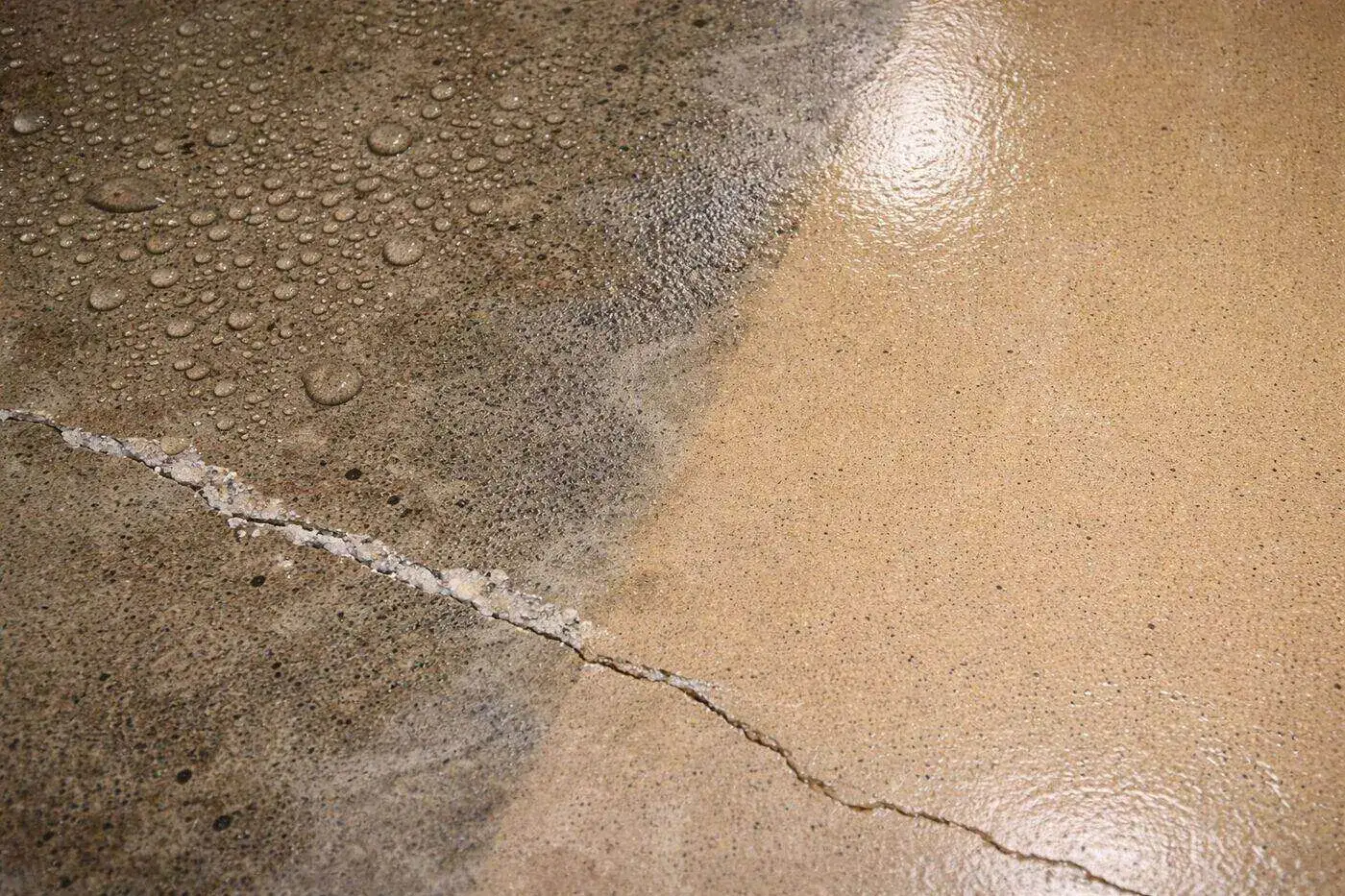
Why Epoxy Floors Fail in Collier County — and the Moisture Test That Prevents It
The high water table, MVT testing, and what to ask before you sign.
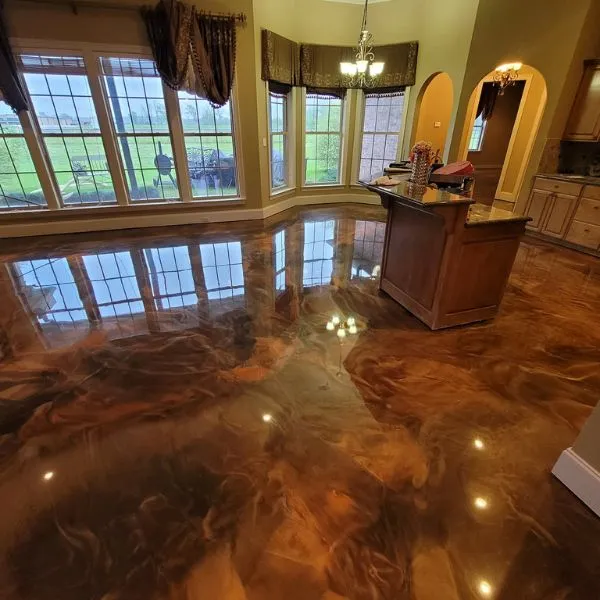
Metallic, Flake & Quartz: Epoxy Floor Design Styles in Collier County
How the decorative finishes compare and how to keep colors true in Florida sun.