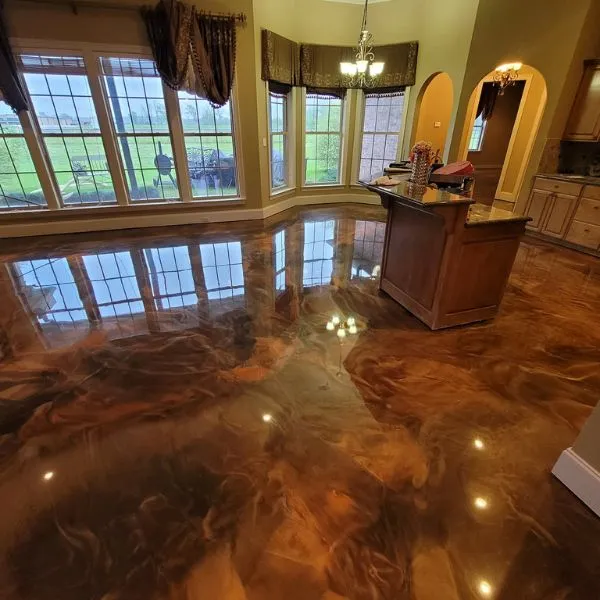
Metallic epoxy is the showpiece finish Naples homeowners ask for most when they want a floor that turns heads — flowing, marbled, almost-liquid depth poured by hand. It runs about $9 to $14 per square foot here, and along the coast there is one detail that decides whether that depth lasts: a UV-stable topcoat. Between the canal-front sun, the salt air, and a rainy season that drives moisture up through the slab, a metallic floor in Collier County is only as good as the system protecting it.
This guide leads with metallic because that is what most people picture when they imagine a designer epoxy floor, then puts it next to the three other decorative systems we install — flake, quartz, and solid color — so you can see where each one earns its keep in a coastal Southwest Florida home. A Vineyards living room and a Pelican Bay dock-side garage are both candidates for epoxy, but they call for very different finishes. Pick the style for the room first, then the color.
At Ascent Epoxy Naples, Blake's crew installs every one of these systems from the beach communities up through North Naples and out to Vineyards, and we spec each one for what Naples actually throws at a floor: humidity off Naples Bay and the Gulf, salt carried inland on the sea breeze, and summer storms that test slab moisture. Want a read on which finish fits your space? Call (239) 323-9216 for a free estimate, or keep reading first.
Flake (Chip) Epoxy
If metallic is the showpiece, flake is the everyday floor that most Naples garages actually end up with. Vinyl color chips are scattered by hand across a still-wet pigmented base, then sealed under a clear coat, leaving a speckled, multi-tone surface with a faint texture. That texture is not just looks: it grips when the floor is wet from a rained-on driveway or a rinsed-off boat, and it does a good job of camouflaging hot-tire pickup and the small pits and trowel lines a Southwest Florida slab tends to have.
Flake also gives you the widest menu of any style. The chip blends run from quiet greys and sandy tans that suit a clean Ave Maria garage to bolder mixes with blue, copper, or charcoal flecks that read almost coastal. You control how heavy the broadcast goes, too — a light scatter that lets the base show, or a full edge-to-edge cover. For a working garage near the water, a full broadcast under a UV-stable polyaspartic topcoat is the value pick: it shrugs off humidity, takes the salt air, and holds its color through the summer sun.
Metallic Epoxy
Metallic is the finish people stop and stare at, and in Naples it tends to chase the look of the things people here already love: water, sky, and stone. Reflective pigment is suspended in clear resin and then coaxed across the slab by hand — rolled, brushed, and torched while it cures — until it swirls into flowing, three-dimensional patterns. The most-requested palettes locally read like the coast itself: ocean teals and deep aquamarines, sandy pearl and champagne, slate-and-silver that mimics polished marble. Because every pour is worked live, no two floors come out the same, so an Old Naples condo off Fifth Avenue South and a Grey Oaks great room end up with genuinely one-of-a-kind floors.
That is why metallic lands in the rooms meant to impress — entryways, living areas, home gyms, salons, model-home and boutique retail floors, and the occasional showroom-style garage where a car is the display, not the chore. Price scales with how much movement and how many layers you want: a single-color marble effect sits near the bottom of the roughly $9 to $14 per square foot range, while a multi-pigment, multi-layer pour with real depth reaches the top. Most of what you pay for is the hand pouring it, because a metallic floor is only as good as the installer's eye.
Here is the catch nobody warns coastal homeowners about: that deep, glossy look is exactly what the Florida sun attacks first. A metallic floor finished with a cheap, non-UV-stable topcoat will amber and chalk, and the depth that made it worth the money goes flat — fastest in rooms with big west-facing windows or an open bay door. The fix is non-negotiable on every metallic floor we pour in Naples: a UV-stable polyaspartic or polyurea topcoat that locks the pigment, resists yellowing, and keeps the color reading true season after season.
Quartz Epoxy
Quartz is the toughest decorative system we install, and it is the one that earns its keep around water. Colored quartz granules — harder and heavier than vinyl flake — are broadcast into the resin to build a thick, dense, impact-resistant layer with an aggressive grip that holds even when soaked. That last part matters in Naples: it is the finish we reach for on pool-deck transitions, dock-side and waterfront utility rooms, boat-storage bays, and the commercial kitchens, clinics, locker rooms, and food-service floors where health codes set the slip standard.
It is not just a commercial product, though. As a premium residential choice it shines in a hard-used laundry room or a saltwater-rinse station off the garage, anywhere traction and durability beat pure looks. Quartz can be tinted across a range of blends, so it does not have to read industrial. Because the granule blend and the build thickness get matched to the specific use, a quartz floor is quoted after we walk the space rather than priced off a chart — commercial quartz in Naples generally lands around $3 to $8 per square foot depending on system and square footage.
Solid Color Epoxy
Solid color is the no-frills entry point: one uniform, glossy color with no chips and no pigment movement, just a smooth coat that sweeps and mops in minutes. It is the right call for a utility garage, a storage room, a closet, or a workshop corner — anywhere the slab needs to be sealed and serviceable rather than shown off.
Skipping the decorative media is what makes it the cheapest finish, but it is no excuse to skip the prep, and in Naples that prep is the whole ballgame. With a high coastal water table and a slab that draws moisture all rainy season, a solid-color floor still needs a full diamond grind, crack repair, and, on a lot of properties here, a moisture-mitigation primer before any color goes down — the same free ASTM slab-moisture test (a $200 to $400 value) we run before every install tells us whether that primer is required. Pair it with a UV-stable topcoat and a solid-color floor will outlast a big-box garage kit by years. It is the budget option, not the cut-corner option.
Design Styles Compared
Here is the quick side-by-side for Collier County in 2026. Cost is per square foot installed in this market; durability and slip ratings are relative to one another within epoxy systems, and all of them assume the diamond-grind prep, crack repair, and UV-stable topcoat the coastal climate here demands.
| Style | Look | Durability | Slip Resistance | Best Room | Cost / Sq Ft |
|---|---|---|---|---|---|
| Metallic | Marbled, glossy, ocean-and-stone depth | High | Moderate | Living / showroom | $9–$14 |
| Flake | Speckled, multi-tone, hides marks | High | Good | Garage | $5–$12 |
| Quartz | Textured, granular, tintable | Highest | Highest | Kitchen / wet area | $3–$8 (commercial) |
| Solid Color | Smooth, single-color gloss | Good | Moderate | Storage / utility | $5–$7 |
A standard two-car garage in flake, fully prepped with a polyaspartic topcoat, typically lands around $4,000 to $5,500 in Naples depending on slab condition and the blend you choose — a useful anchor when you are comparing the per-square-foot finishes above.
Not Sure Which Finish Suits Your Naples Home?
Tell us the room, how you use it, and how close you are to the water. We will recommend the right finish and topcoat for the coastal climate and give you a real number, free.
Choosing by Room
The quickest way to decide is to start with the room and what it has to put up with — and in a coastal county, how much sun and moisture it sees. Match the finish to the job and the choice almost makes itself.
- Living areas, entryways, and showrooms: Metallic. When the floor is meant to be admired, the hand-poured ocean-and-stone effect makes a centerpiece of a great room, foyer, home gym, salon, or model-home floor — always under a UV-stable topcoat so the depth survives the window light.
- Garage: Flake is the default, including the boat-and-truck garages common in the canal-front communities of Marco Island and Naples Bay. It hides tire marks and slab flaws, grips when wet, and the blends match almost any home. A UV-stable polyaspartic topcoat is what makes it last with the bay door open to the sun.
- Kitchen, clinic, or wet utility room: Quartz. Where you need maximum durability and the best wet-floor grip for spills, rinse-downs, and heavy traffic, quartz is the code-friendly pick.
- Storage and utility spaces: Solid color. For a workshop corner, storage room, or strictly-functional garage, a clean single-color coat seals the slab at the lowest cost.
- Pool deck, lanai, or dock area: Flake or quartz with an anti-slip additive and a UV-stable topcoat. These sun-soaked, splash-prone surfaces are exactly where Naples floors fail early, so the spec leans hard on grip and UV stability.
When a space does double duty, spec for the tougher job. A garage that doubles as a gym or a fishing-gear workshop still starts as flake, because it has to take the car and the salt water first.
Colors & Keeping Them True in the Florida Sun
Color is the fun part, and every finish here gives you plenty of it. Flake comes in dozens of ready-made blends, metallic can be mixed to nearly any custom tone with real depth, quartz tints from soft neutrals to bright safety colors, and solid color covers the full palette. In Naples, the coastal palettes win: aquamarine and teal metallics, sandy and pearl neutrals, blue-grey flake that echoes the water. But choosing the color is only half the decision — the other half is keeping it true through a few Southwest Florida summers.
The sub-tropical sun is relentless here, and the salt-laden sea breeze does not help. Strong year-round UV ambers and chalks any coating that is not UV-stable, faster than most owners expect, and a floor sealed with a cheap topcoat yellows, dulls, and loses its depth. Metallic takes the worst of it, since depth and shine are the entire point. The answer is simple and not optional on the coast: a UV-stable polyaspartic or polyurea topcoat over whatever finish you pick. It locks the pigment, fights yellowing, and holds the color reading true.
It matters most on the rooms that catch the most light — interiors with big west- and south-facing windows, screened lanais, and open garages where the bay door stays up and the sun hits the slab head-on. To understand why the topcoat does so much of the heavy lifting in this climate, our guide on epoxy vs. polyaspartic breaks it down, and our cost guide shows where that UV-stable upgrade lands in the price of each finish.
Frequently Asked Questions
How much does a metallic epoxy floor cost in Collier County?
Metallic epoxy runs roughly $9 to $14 per square foot installed in Naples, with the price set by how much movement and how many pigment layers the design calls for. A single-color marble effect sits near the bottom; a multi-layer, multi-pigment pour with deep coastal tones reaches the top. Most of the cost is the skilled hand-work during the pour, plus the UV-stable topcoat the climate here requires.
Will a metallic floor fade in the Southwest Florida sun?
Only if it is sealed with the wrong topcoat. Naples's year-round UV and salt air amber and chalk any coating that is not UV-stable, and that dulls a metallic floor's depth fastest of all because depth is the whole point. Finished with a UV-stable polyaspartic or polyurea topcoat, the pigment stays locked and the color reads true. It matters most in rooms with big west-facing windows and in open garages where the bay door lets the sun hit the slab.
What metallic colors look best in a coastal Naples home?
The palettes that suit homes here tend to echo the surroundings: ocean teals and aquamarines, pearl and champagne neutrals, and slate-and-silver blends that mimic polished marble. Because every metallic floor is poured by hand, the tone can be custom-mixed to match a great room, an entry, or a waterfront condo, and no two floors come out exactly alike.
Which epoxy finish holds up best near the water?
Quartz is the most slip-resistant and the toughest around moisture, which makes it the pick for pool-deck transitions, dock-side utility rooms, and boat-storage bays, as well as commercial kitchens and clinics. Flake is the everyday garage floor and grips well when wet, and any finish can take an anti-slip additive for splash-prone areas like a lanai. All of them need a UV-stable topcoat to last in Naples's salt air and sun.
Does a Naples slab need extra prep before epoxy?
Usually, yes. With a high coastal water table and a long rainy season, many Naples slabs pull moisture that can lift a coating if it is not handled first. Every install starts with a full diamond grind and crack repair, and we run a free ASTM slab-moisture test (a $200 to $400 value) to tell whether a moisture-mitigation primer is needed before the color and topcoat go down.
Is metallic a good choice for a garage?
It can be, but for most Naples garages flake is the smarter call. Flake hides hot-tire marks and slab flaws, grips when wet, and comes in dozens of blends, and under a UV-stable polyaspartic topcoat it handles the humidity and the sun through an open bay door. Metallic is worth it in a showroom-style garage where the car is on display rather than parked and worked on daily.
Get Your Personalized Collier County Epoxy Quote
The surest way to pick a finish is to see samples in your own light and talk through how the room gets used — and how close it sits to the water. At Ascent Epoxy Naples, every estimate starts with a real look at your slab, a free ASTM moisture test where it is warranted, and an honest call on which finish, color, and topcoat fit your space, your budget, and the coastal climate. No pressure, no bait-and-switch — just a clear plan and a floor built for Southwest Florida.
Ready to start? Call Blake's team at (239) 323-9216 or request a free quote online. We serve Naples, Marco Island, Pelican Bay, Golden Gate, North Naples, Naples Park, Lely Resort, Vineyards, East Naples, Ave Maria, and the surrounding communities across Collier County.
Related Articles
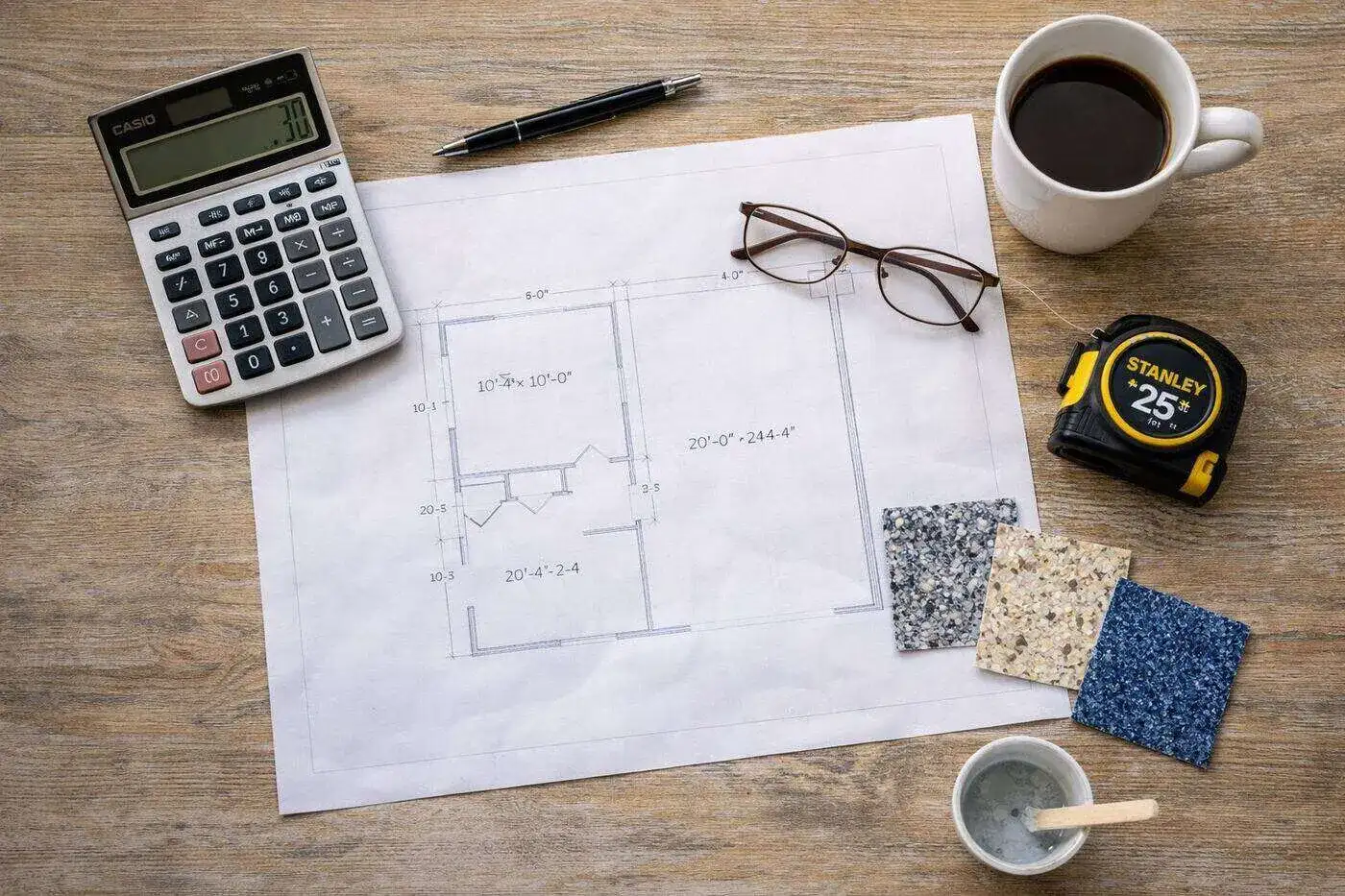
How Much Does Epoxy Flooring Cost in Collier County? (2026 Guide)
Real prices by finish and a typical 2-car garage total.
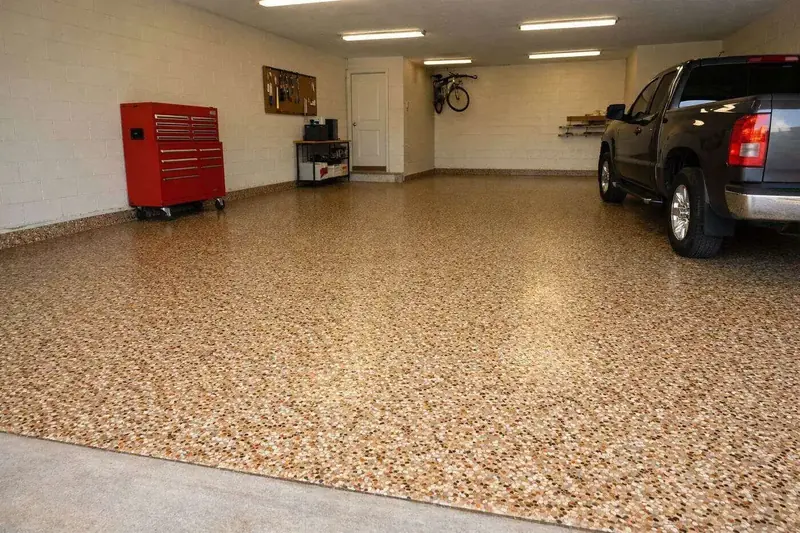
Epoxy vs. Polyaspartic: Which Is Better for a Collier County Floor?
Cure time, UV, humidity, and why the durable local floor uses both.
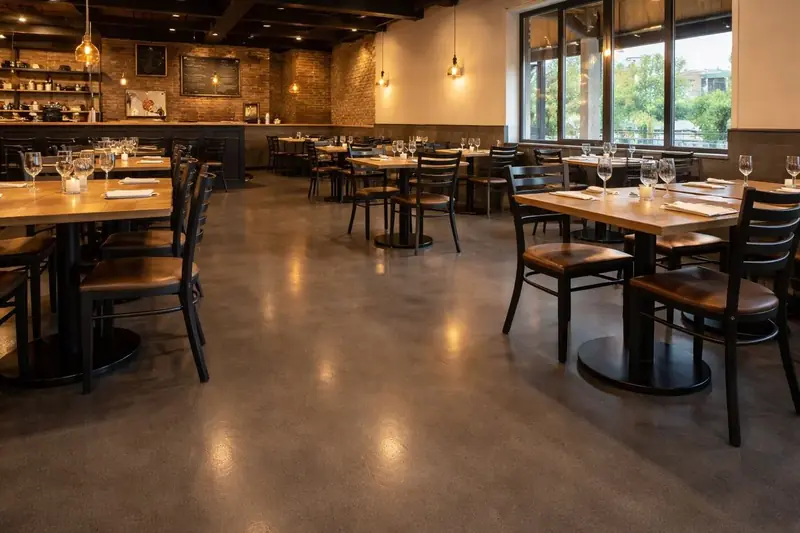
Commercial Epoxy Flooring in Collier County
Seamless, sanitary, slip-rated floors by industry.